Arthritis in Dogs, The Slow Signs Owners Mistake for Normal Aging
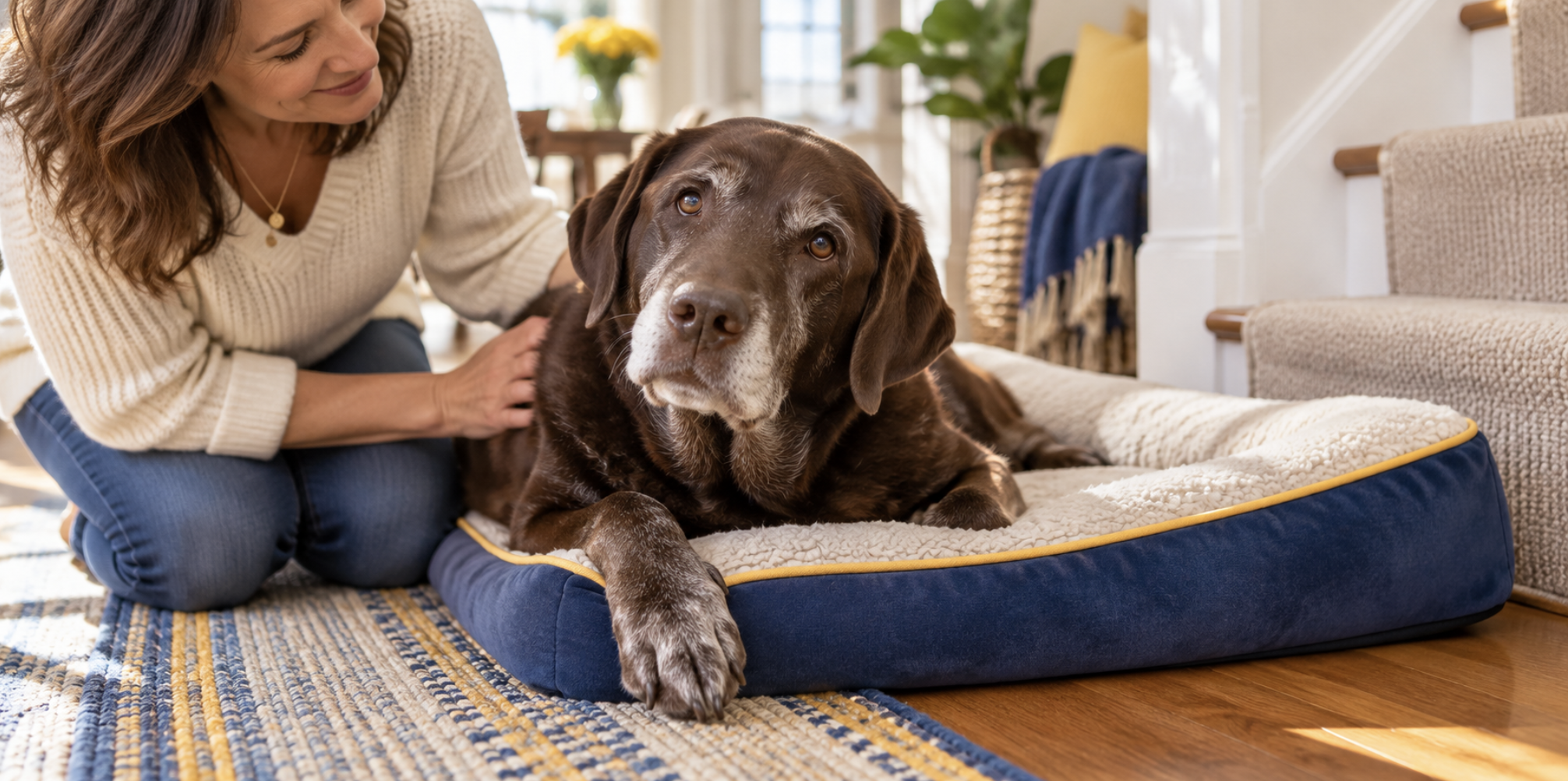
"He's just getting older" is the most common reason arthritis in dogs goes untreated. Slowing down on the stairs, cutting walks short, and taking longer to get up are often signs of joint pain, not age alone. The good news is that arthritis is very treatable, and most dogs become more active and comfortable once their pain is managed.
Here is how to spot it early and what we can do about it at our animal hospital.
What arthritis in dogs actually is
Arthritis, also called osteoarthritis, happens when the cartilage that cushions a joint wears down. Without that cushion, bones rub and the joint becomes inflamed and painful.
- It is a slow, ongoing condition that gets worse without treatment
- It most often affects the hips, elbows, knees, shoulders, and spine
- It cannot be cured, but pain and mobility can be managed well for years
Signs of arthritis in dogs owners mistake for normal aging
Dogs rarely cry out from joint pain. Instead, they change how they move and behave.
- Slow on the stairs. Pausing before climbing or avoiding stairs completely
- Shorter walks. Lagging behind, wanting to turn home early, or sitting down partway
- Stiff after rest. Moving slowly after a nap, then loosening up after a few minutes
- No more jumping. Not getting on the couch, the bed, or into the car without help
- Licking a joint. Repeated licking of a wrist, knee, or hip
- Mood changes. Less interest in play, more sleep, or grumpiness when touched
Any one of these is worth mentioning at your dog's next wellness exam, or sooner if it is getting worse.
Dogs at higher risk
Arthritis in dogs can start much younger than most owners think. Risk is higher for dogs that are
- Overweight, since extra weight puts more pressure on every joint
- Large or giant breeds such as Labradors, German Shepherds, and Golden Retrievers
- Living with hip or elbow dysplasia
- Recovering from a past joint injury, such as a torn knee ligament
- Very active working or sport dogs
How we diagnose arthritis in dogs
- History. We ask what you have noticed at home, since you see your dog move every day.
- Physical exam. We watch your dog walk and gently move each joint to check for pain, swelling, and reduced range of motion.
- X-rays. Our diagnostics show joint changes and rule out other causes of limping.
- Bloodwork. This confirms your dog's liver and kidneys can safely handle long-term pain medication.
Treating arthritis in dogs
Most dogs do best with a combination of treatments rather than one alone.
- Pain relief medication. Anti-inflammatory medications made for dogs reduce pain and swelling
- Monthly injections. A newer treatment option that targets arthritis pain and can suit dogs who do not tolerate daily pills
- Weight management. Even a small amount of weight loss can noticeably reduce pain
- Joint support. Omega-3 fatty acids and joint diets can support mobility alongside medication
- Controlled exercise. Regular short walks keep muscles strong and joints moving
Never give your dog pain medication made for people. Common human pain relievers can cause serious harm to dogs, even in small doses.
Small changes at home that help
Small changes at home make a real difference for arthritis in dogs.
- Lay non-slip rugs or runners on hardwood and tile floors
- Use ramps or steps for the couch, bed, and car
- Provide a thick, supportive orthopedic bed away from drafts
- Take two or three short walks a day instead of one long one
- Choose soft surfaces like grass over pavement when you can
- Keep nails trimmed short so your dog can grip the floor
Common questions about arthritis in dogs
Is my dog too old for treatment? No. Older dogs often show the biggest improvement once pain is controlled. We tailor treatment to your dog's age and overall health.
Will my dog need medication for life? Many dogs do benefit from ongoing pain relief, but the dose and type can change over time. Weight loss and home changes may reduce how much medication your dog needs.
Should my dog still exercise? Yes. Gentle, regular exercise is part of treatment. We will help you find the right amount for your dog.
Can arthritis be prevented? Not always, but keeping your dog lean throughout life is one of the most effective ways to delay it.
Arthritis in dogs is not something your dog simply has to live with. If your dog has slowed down, seems stiff, or has stopped doing things they used to enjoy, call TVS Animal Hospital North York at (416) 546-7493 or TVS Animal Hospital Parliament at (647) 347-3300, or book through our contact page.