What Happens During a Professional Dog Teeth Cleaning, From Exam to Take-Home Care

Most owners know their dog’s breath is not great. Fewer know what a professional dog teeth cleaning actually involves, and that uncertainty is often what delays booking one. It is more than a scrape and polish. It is a full dental check that lets us see, clean, and treat the whole mouth.
Here is what to expect at our animal hospital, from the first exam to the brushing routine you take home.
Signs your dog may be due for a cleaning
- Bad breath that does not go away
- Yellow or brown tartar on the teeth
- Red, swollen, or bleeding gums
- Drooling more than usual
- Dropping food or chewing on one side
- Pawing at the mouth or pulling away when touched
If you notice any of these, a dog teeth cleaning is worth booking.
What happens during a professional dog teeth cleaning
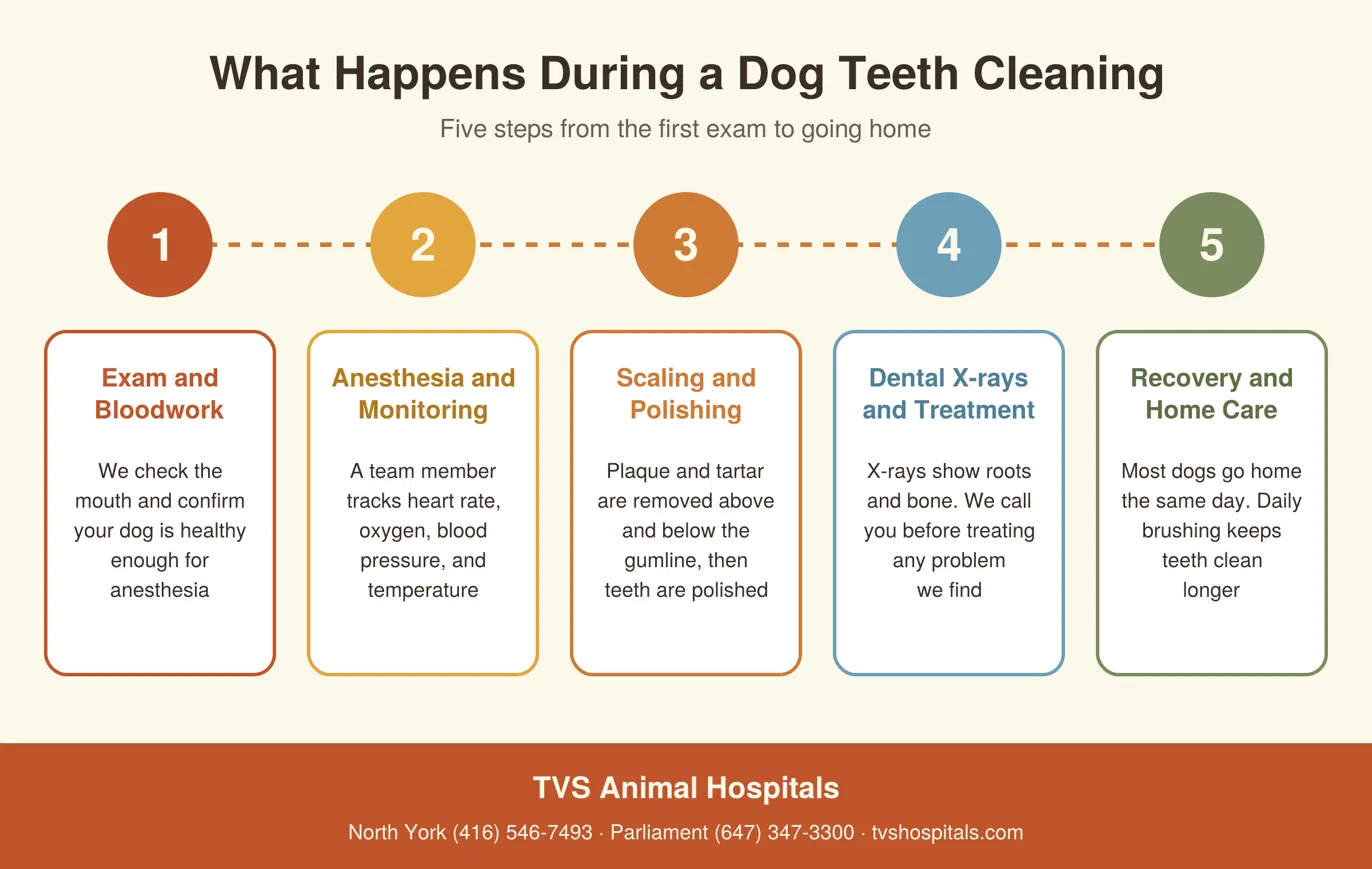
1. Pre-cleaning exam and bloodwork. We start with a physical exam and a look at the mouth, then bloodwork to confirm your dog is healthy enough for anesthesia. This lets us tailor the plan to your dog’s age and health.
2. Anesthesia and monitoring. Your dog gets an IV catheter for fluids and medication. A dedicated team member tracks heart rate, oxygen, blood pressure, and temperature for the whole procedure.
3. Scaling and polishing. We remove plaque and tartar above and below the gumline, where most dental disease starts. Polishing then smooths the enamel so less plaque sticks afterward.
4. Dental X-rays and treatment. About two thirds of each tooth sits below the gumline, so X-rays are how we find root problems, abscesses, and bone loss. If a tooth is damaged or infected, we call you before doing anything. Treatment may include an extraction.
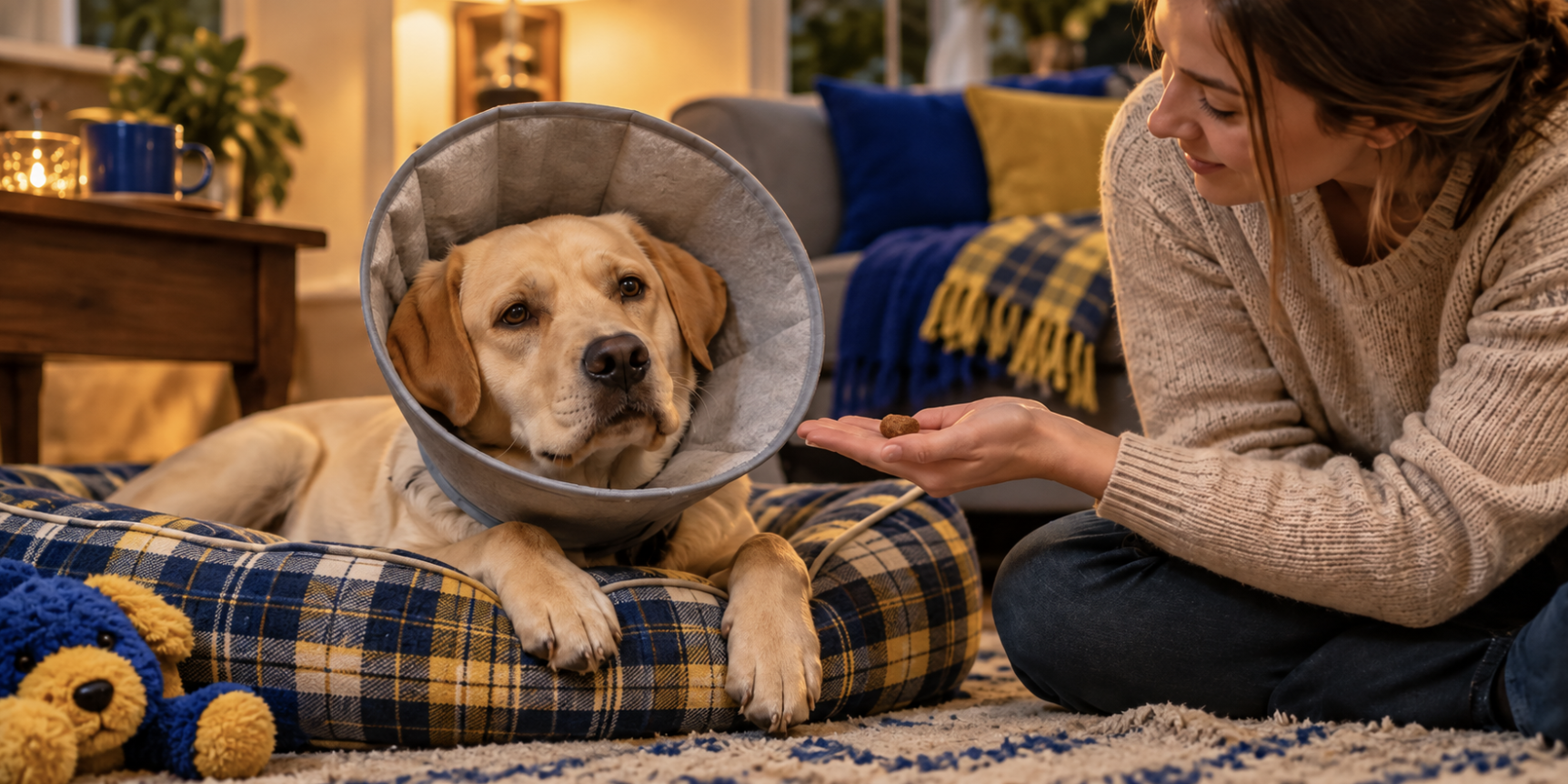
5. Recovery. We keep your dog warm and comfortable while the anesthesia wears off and give pain relief as needed. Most dogs go home the same day.
Anesthesia-based and anesthesia-free dog teeth cleaning
You may see both options offered, so it helps to know how they differ before you call.
Anesthesia-based cleaning
- Your dog is asleep and monitored the whole time
- We can clean below the gumline and take dental X-rays
- Problems we find can be treated in the same visit, with your approval
- The main consideration is anesthetic risk, which bloodwork and monitoring help keep low
- Best suited to dogs with tartar, gum disease, or a suspected tooth problem
Anesthesia-free cleaning
- Your dog stays awake and is gently held in place
- Cleaning is mostly limited to the visible surface, since an awake dog will not allow deeper work
- X-rays are not possible, so problems under the gumline cannot be seen
- Any treatment needed would require a separate visit under anesthesia
- Being held still can be stressful for some dogs
- Best suited to dogs with very light buildup and healthy gums
Veterinary dental organizations generally recommend anesthesia-based cleaning whenever disease is present, because it is the only way to see and treat what sits under the gumline. Your dog’s exam tells us which option fits, and we will explain our reasoning plainly so you can decide.
Dog teeth cleaning aftercare
- Offer a soft meal that evening, then return to normal food as advised
- Give any pain medication or antibiotics exactly as prescribed
- Expect your dog to be a little sleepy for the rest of the day
- Call us if gums keep bleeding, appetite has not returned by the next day, or your dog seems in pain
Home brushing that extends the results
A professional dog teeth cleaning resets the mouth. Daily care keeps it that way.
- Brush daily. Use dog toothpaste only, since human toothpaste is not safe for dogs. Start slowly and build up.
- Choose approved products. Look for the Veterinary Oral Health Council (VOHC) seal on dental chews, diets, and water additives.
- Skip hard chews. Bones, antlers, and hard nylon toys can break teeth.
- Keep up your checkups. Your dog’s wellness exam includes a look at the mouth, which helps us set how often your dog needs a dog teeth cleaning.
Common questions about dog teeth cleaning
Is anesthesia safe for my dog? The pre-cleaning exam, bloodwork, and monitoring are there to keep risk as low as possible. Older dogs and dogs with health conditions can often still have a cleaning safely, and we will tell you honestly what we see.
How often does my dog need a cleaning? It depends on breed, age, and how quickly tartar builds. Small breeds often need one sooner and more often than large breeds. We will recommend a schedule after your dog’s first dental exam.
Will my dog lose teeth? Only if a tooth is diseased or damaged, and we will talk to you first. Removing a painful tooth usually makes eating more comfortable.
What if my dog has a broken tooth or a swollen face? Do not wait for a scheduled cleaning. Our urgent care team can see your dog during opening hours.
A regular dog teeth cleaning protects more than your dog’s smile. It stops gum infection from spreading and keeps eating comfortable. If your dog’s breath has changed or it has been a while since their last dental exam, call TVS Animal Hospital North York at (416) 546-7493 or TVS Animal Hospital Parliament at (647) 347-3300 , or book through our contact page.