Spaying Your Cat, the Right Age and What the First Week at Home Looks Like

Spaying a cat is one of the most common surgeries we perform, and the timing matters more than many owners realize. Cats can come into heat much earlier than people expect, often before anyone has thought about booking the procedure.
This guide covers the right age for spaying a cat, what happens on surgery day, and how to keep her calm and comfortable during the first week at home.
The right age for spaying a cat
- Most cats are spayed at five to six months of age
- Many veterinary groups now recommend spaying a cat by five months, before her first heat
- Some cats come into heat as early as four months, so waiting until six months or later can be too late
- Adult cats can be spayed at any age after a health check
If your kitten is close to four months old, now is a good time to talk to us about booking.
Heat cycles and roaming, in plain terms
A cat in heat is not sick, but it is hard on her and on your household. Signs include the following.
- Loud, repeated yowling, often at night
- Rolling on the floor and rubbing against furniture
- Raising her hindquarters when touched
- Restlessness and trying to get out the door
A heat lasts about a week and can return every two to three weeks through spring and summer. Indoor cats under household lights may cycle year-round. A cat in heat will try hard to escape, and a single escape can lead to a pregnancy. This is why booking on time matters.
Why spaying a cat before her first heat matters
- Prevents pregnancy. No surprise litters.
- Lowers mammary cancer risk. The protection is strongest when she is spayed before her first heat.
- Prevents uterine infection. Removing the uterus removes the risk of pyometra, a serious infection in unspayed cats.
- Ends heat behaviour. Yowling, roaming, and escape attempts stop.
Spaying a cat later in life is still worthwhile. The health benefits start from the day of surgery.
What spaying a cat involves
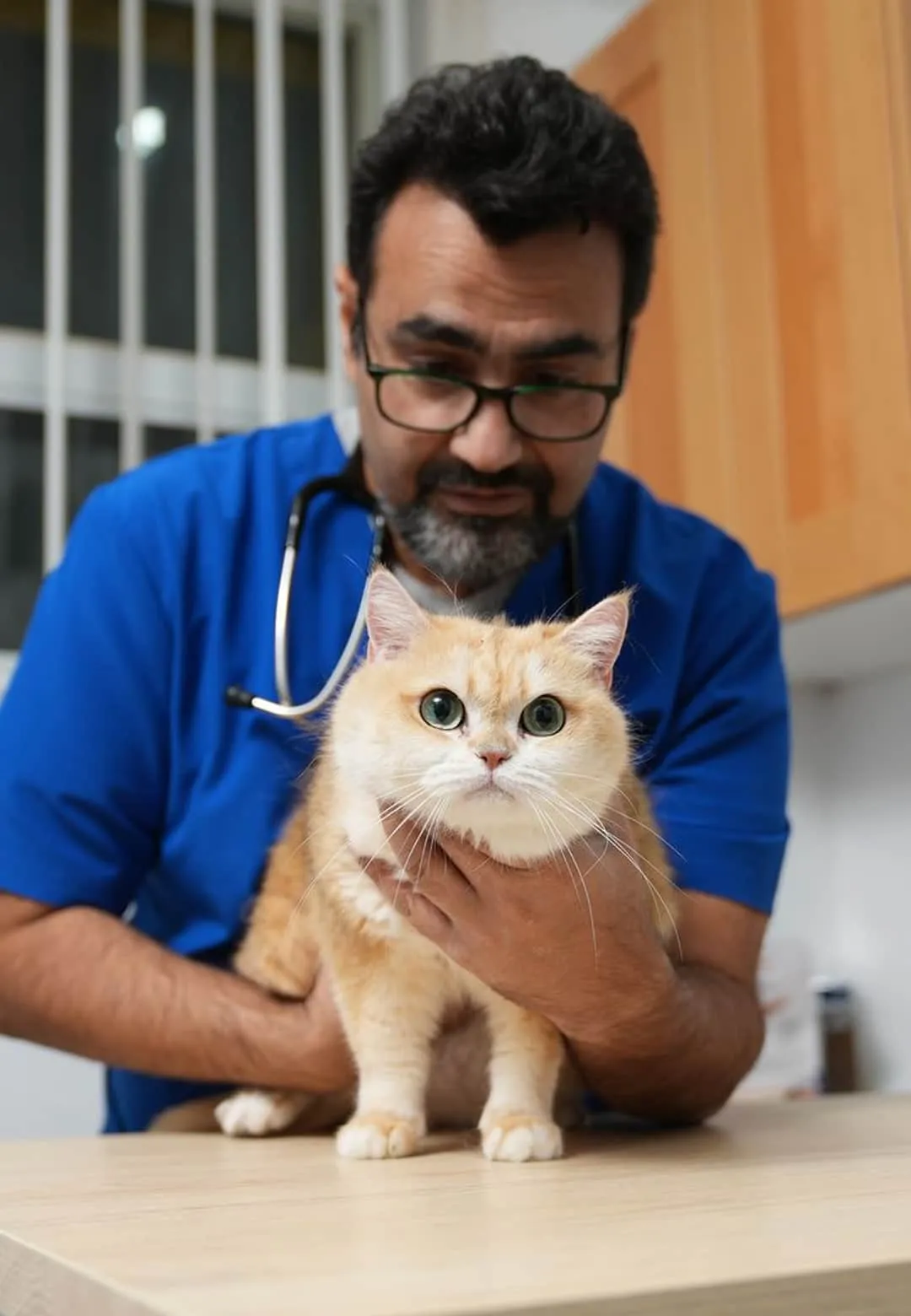
- Pre-surgery exam. We check her overall health and may recommend bloodwork before anesthesia.
- Fasting the night before. We will tell you exactly when to remove food.
- Anesthesia and monitoring. She is fully asleep, and a team member watches her vital signs throughout.
- The surgery. We remove the ovaries and usually the uterus through a small incision on her belly. Stitches are often placed under the skin.
- Pain relief and recovery. She wakes in a warm, quiet space. Most cats go home the same day.
The first week at home
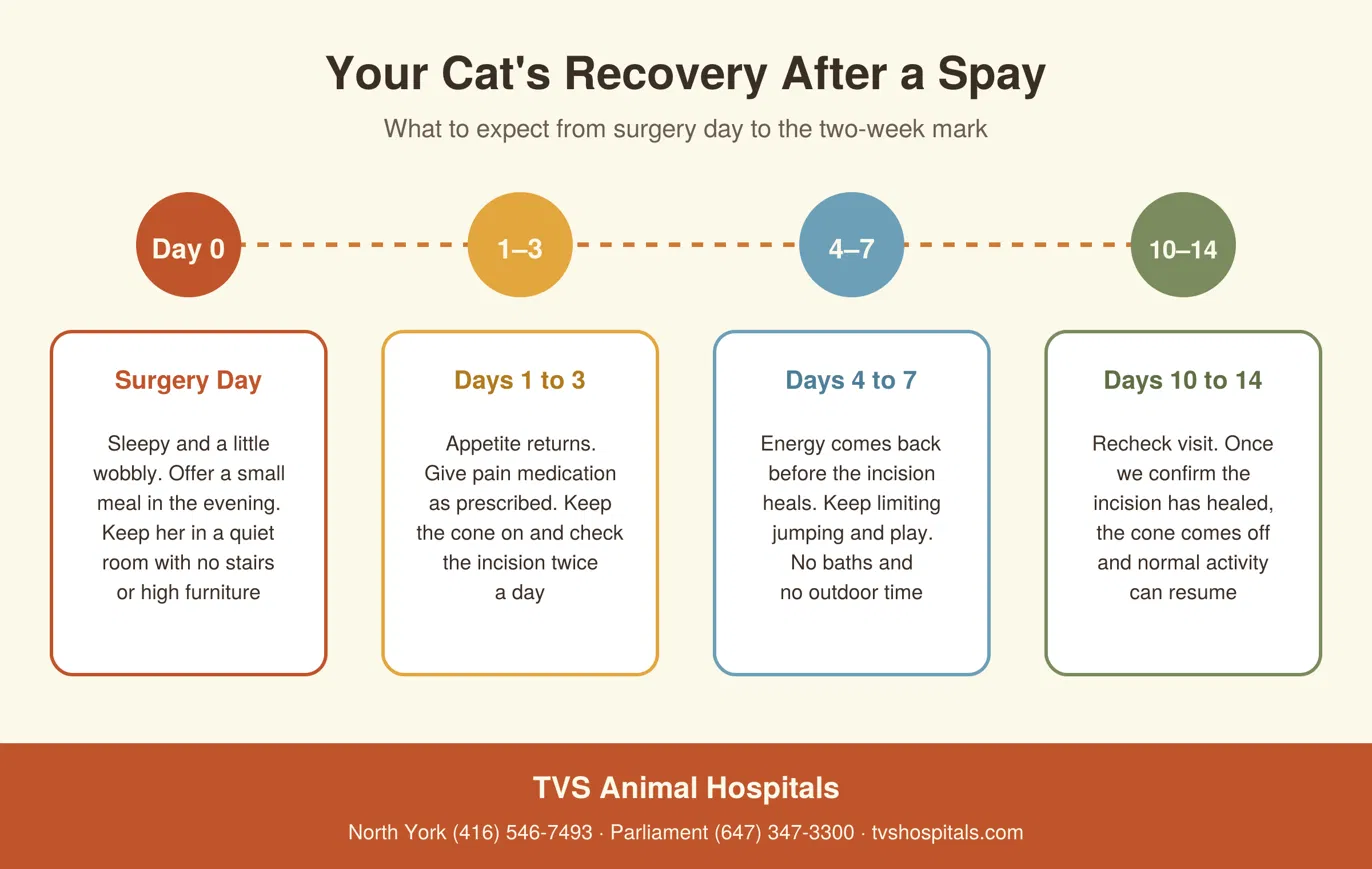
Surgery day
- Keep her in a quiet room away from other pets and children
- Remove access to stairs and high furniture
- Offer a small meal in the evening, about half her usual amount
- Expect her to be sleepy and a little unsteady
Days 1 to 3
- Her appetite should return within a day
- Give pain medication exactly as prescribed
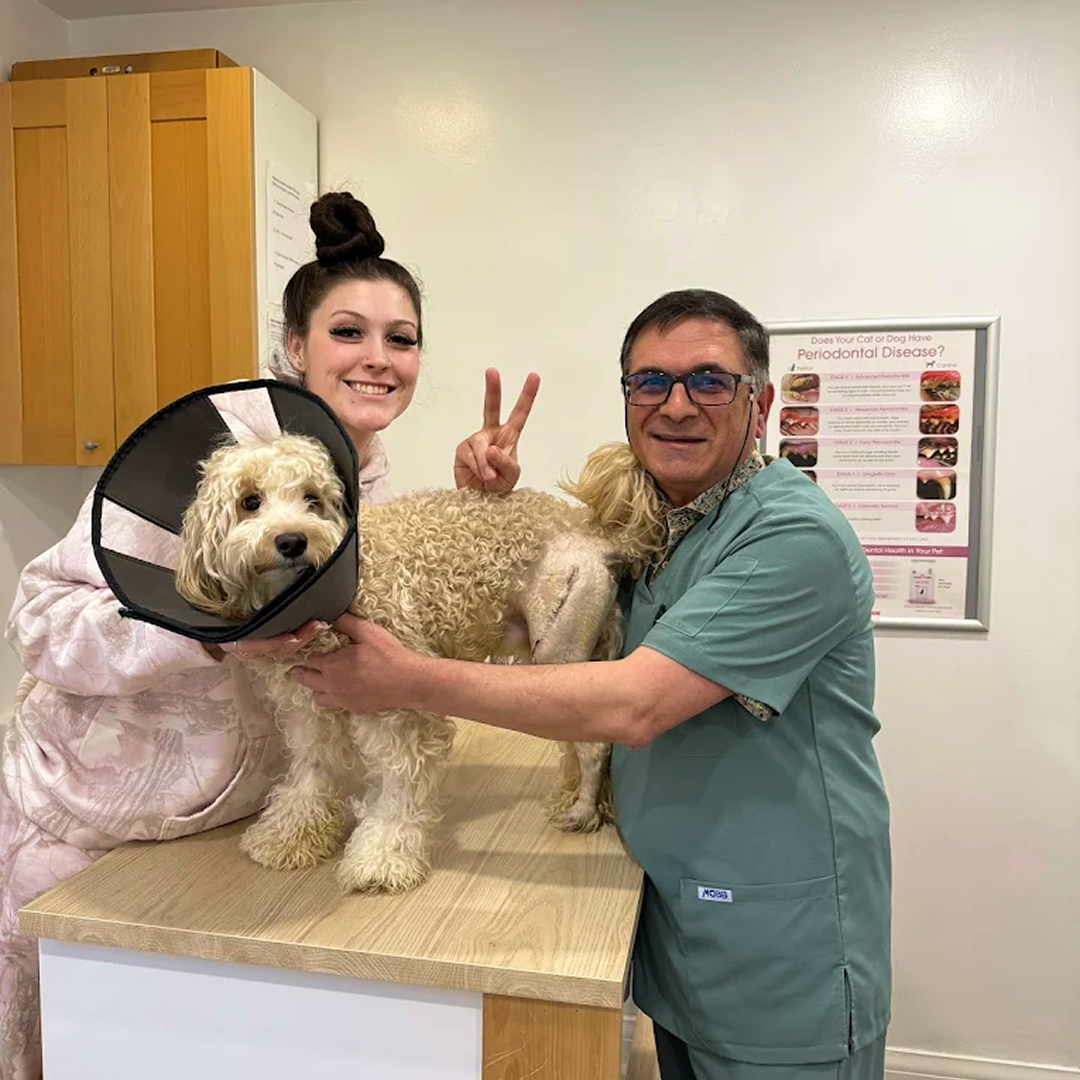
- Keep the cone or recovery suit on at all times
- Check the incision twice a day
Days 4 to 7
- Her energy often returns before the incision has healed, so keep limiting jumping and rough play
- No baths and no outdoor time
- Mild redness or slight bruising around the incision is normal
Days 10 to 14
- Come in for a recheck so we can confirm the incision has healed
- Once we confirm healing, the cone comes off and normal activity can resume
Keeping the incision clean
- Do not clean, apply cream to, or cover the incision unless we tell you to
- Use a clean litter box and scoop it often
- Some owners switch to paper-based litter for the first week so less dust sticks to the incision
- Keep her from licking the area, since licking is the most common cause of healing problems
When to call us
- The incision opens, leaks, or has pus or a bad smell
- Swelling gets bigger instead of smaller
- She has not eaten within 24 hours of coming home
- She vomits more than once, seems very weak, or hides and will not respond
- She strains to urinate or has not used the litter box in 24 hours
If something seems wrong outside a planned visit, our urgent care team can see her during opening hours.
Common questions about spaying a cat
Is spaying a cat safe? It is a routine surgery, and the pre-surgery exam and monitoring are there to keep risk low. We will go over any concerns specific to your cat before the procedure.
Will she gain weight after being spayed? Her energy needs drop a little after surgery. Adjusting her portions and keeping her active prevents weight gain. We can help with a feeding plan at her next wellness exam.
Can I spay her while she is in heat? Often yes, though we may suggest waiting until the heat ends. We will advise you based on her exam.
Does an indoor cat still need to be spayed? Yes. Indoor cats still go through heat cycles, still try to escape, and still face the same health risks.
Spaying a cat is a one-time decision that protects her health for life, and the best results come from booking before her first heat. If your kitten is approaching four months or you have an adult cat who has not been spayed, call TVS Animal Hospital North York at (416) 546-7493 or TVS Animal Hospital Parliament at (647) 347-3300, or book through our contact page. Our animal hospital team will walk you through every step.