Why Your Dog Won't Stop Itching, and When Allergies Are the Cause
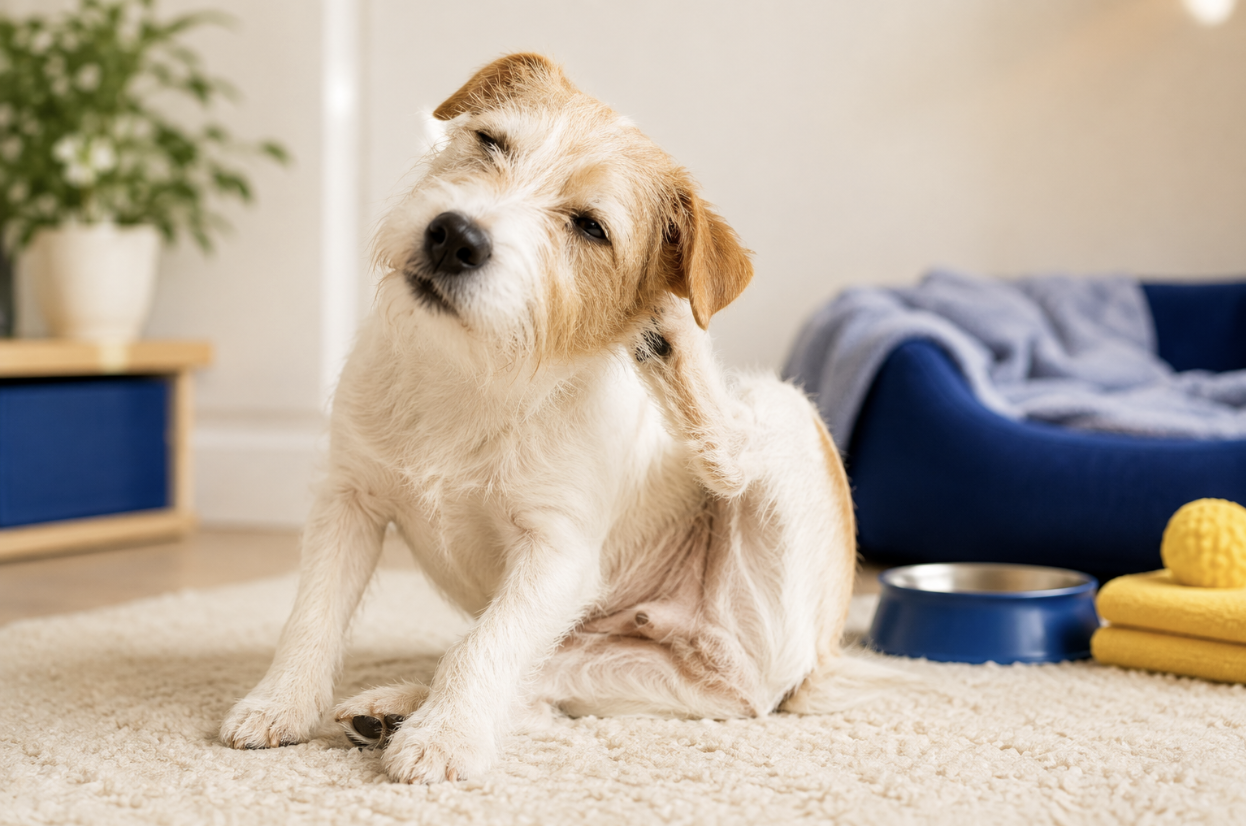
When people develop allergies, they sneeze. When dogs develop allergies, they itch. The immune reaction that gives you watery eyes in May gives your dog inflamed paws, a rubbed-raw face, and ears that flare up again and again. That single difference explains why so many owners chase shampoos and diet changes for months without relief: dog allergies rarely look like allergies.
Constant scratching is not a personality trait, and it is not something to wait out. It is information.
Where and when your dog itches gives you clues
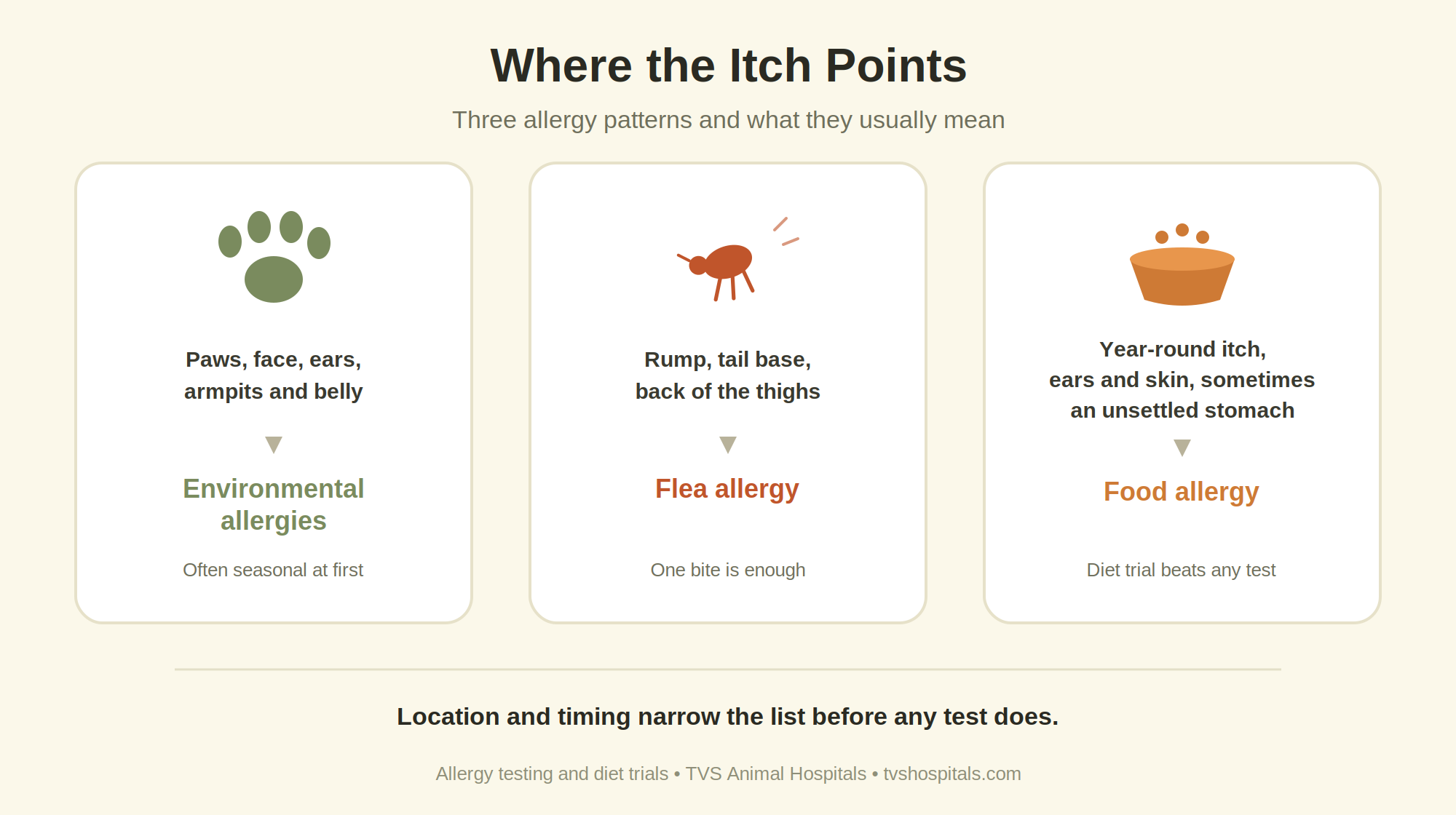
Two questions narrow the cause faster than anything you can buy: where does your dog scratch, and does it happen year-round or only in certain seasons? An itch that targets the paws and face in June points somewhere very different than an itch that lives at the tail base, or one that never takes a season off.
The three main types of dog allergies
Environmental allergies, also called atopic dermatitis, are the classic culprit behind licked paws, rubbed faces, itchy armpits, and recurring ear trouble. Pollens, dust mites, and moulds drive the reaction. It usually first appears between six months and three years of age, starts seasonal, and often expands until it runs most of the year. In some dogs, repeat ear infections are the only visible sign.
Flea allergy concentrates the damage at the rump, tail base, and back of the thighs. The trap is that a flea-allergic dog needs just one bite to itch for days, so "I have never seen a flea on her" rules out nothing. This is why consistent prevention doubles as a diagnostic step.
Food allergy produces year-round itching, often with skin and ear trouble together, and sometimes an unsettled stomach. The trigger is usually a protein your dog eats daily, beef, chicken, or dairy, rather than the grains that pet food marketing blames. It can develop even after years on the same food.
How scratching leads to skin infections
Whatever starts the itching, the scratching takes over. Broken skin invites the yeast and bacteria that normally live there peacefully to multiply, and those infections itch on their own. By the time many dogs reach us, the allergy and the infection are feeding each other, which is why treating one without the other fails, and why the ears so often flare first.
How we find the cause of the itching
Allergy is a diagnosis you earn by elimination, and we work in a deliberate order at TVS Animal Hospitals:
- Rule out the simple causes first. Skin scrapes and cytology through our in-house diagnostics catch mites, yeast, and bacteria, and airtight parasite prevention removes fleas from the suspect list.
- Calm the skin. Modern anti-itch medications bring relief within days, and any secondary infection gets treated properly so the cycle breaks.
- Run a food trial if the pattern fits. A strict elimination diet for eight to twelve weeks, followed by a deliberate rechallenge, is the only reliable way to diagnose a food allergy. The hard part is the word strict: one dropped crust under the table restarts the clock.
- Test to treat environmental allergies. Allergy testing identifies which pollens, mites, and moulds your dog reacts to so we can build immunotherapy, the one treatment that retrains the immune system instead of muting it.
Worth knowing before you spend money anywhere: no blood, saliva, or skin test can diagnose a food allergy. Testing earns its cost when it guides immunotherapy for environmental disease, and we will tell you plainly which situation your dog is in.
- TVS Animal Hospital North York: (416) 546-7493
- TVS Animal Hospital Parliament: (647) 347-3300.
Common questions about dog allergies
My dog itches constantly but has no fleas. What gives? Flea allergy needs only a single bite, and environmental allergies need no fleas at all. Persistent itching with a clean coat usually points to atopic dermatitis or food, and the itch's location helps us tell which.
Can I just give an antihistamine from my medicine cabinet? Check with us first. Antihistamines disappoint far more often in dogs than in people, human dosing does not transfer safely, and they do nothing for the infections that scratching leaves behind. Days of the wrong remedy are days the skin gets worse.
Do those at-home saliva or hair allergy kits work? No. Saliva and blood testing cannot reliably diagnose food allergies, and mail-in kits have no credible evidence behind them. Put that money toward diagnostics that actually change the treatment plan.
Will my dog grow out of her allergies? Environmental allergies are managed, not cured, and untreated they tend to broaden with age. The encouraging part: between immunotherapy, modern anti-itch medication, and diet trials, almost every allergic dog can live comfortably. Starting early keeps the skin, and your patience, intact.
An itchy dog is solvable. It takes a methodical owner, a methodical veterinary team, and a plan that treats the cause instead of renting relief. If the scratching in your house will not stop, book a visit through our contact page and we will start reading what the itch is telling us.