Dog Vomiting or Diarrhea? When to Wait and When to Worry
Most episodes of dog vomiting or diarrhea resolve on their own within a day or two. Dogs scavenge, gulp pond water, raid compost, and switch foods without ceremony, and their stomachs register complaints about all of it. The skill worth having is recognizing the exceptions, because the exceptions move fast.
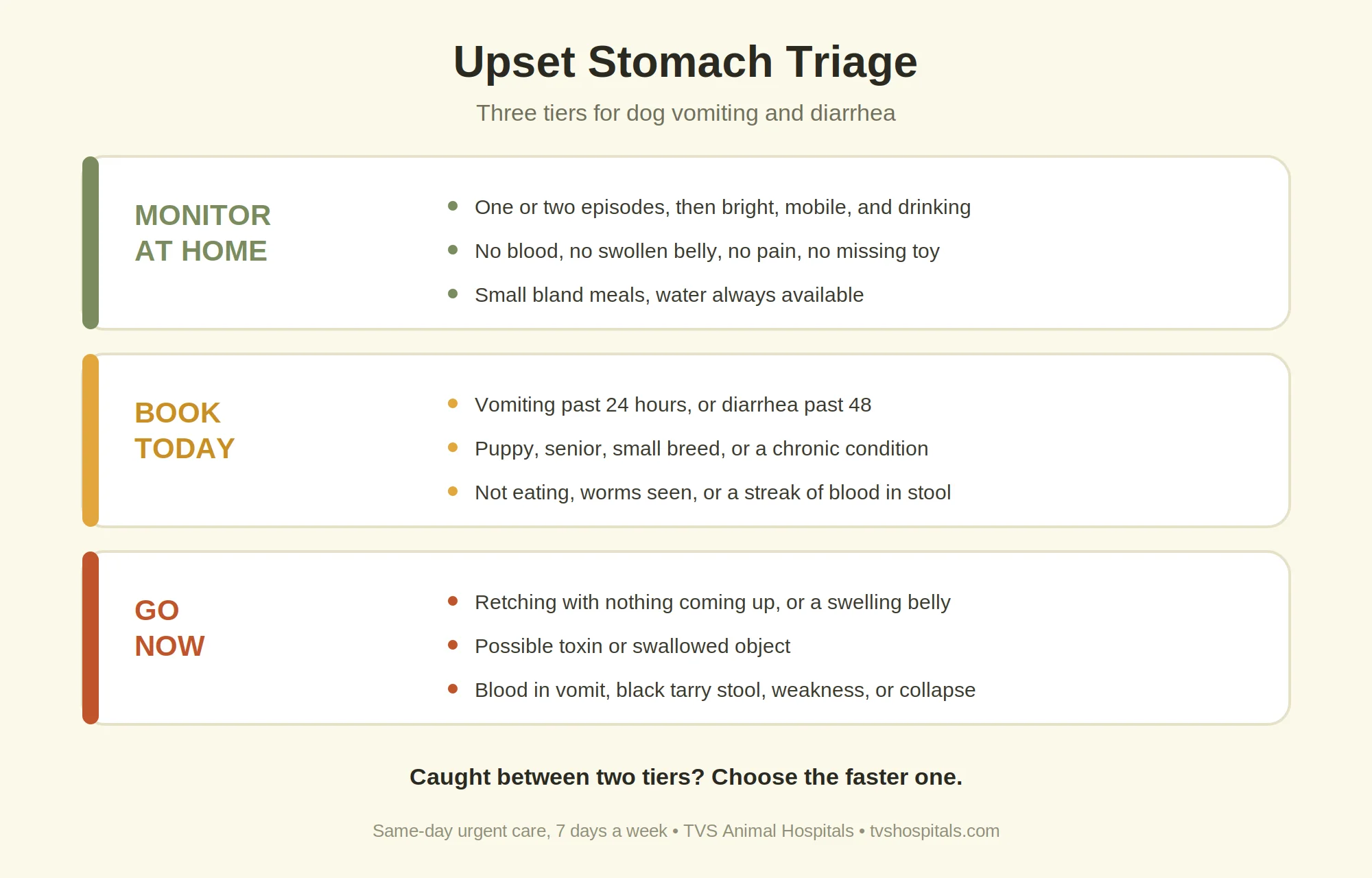
The framework below is the same one our team at TVS Animal Hospitals walks callers through on the phone every week. It sorts the situation into three tiers, and when you find yourself between two of them, choose the faster one.
Green tier: usually safe to monitor at home
This tier fits when all of the following are true:
- One or two episodes, then your dog acts like herself: alert, mobile, interested in you
- She keeps water down and her gums feel slick, not tacky or dry
- No blood, no swollen belly, no signs of pain, no known toxin or missing toy
- She is a healthy adult, not a puppy, a senior, or a dog with an ongoing condition
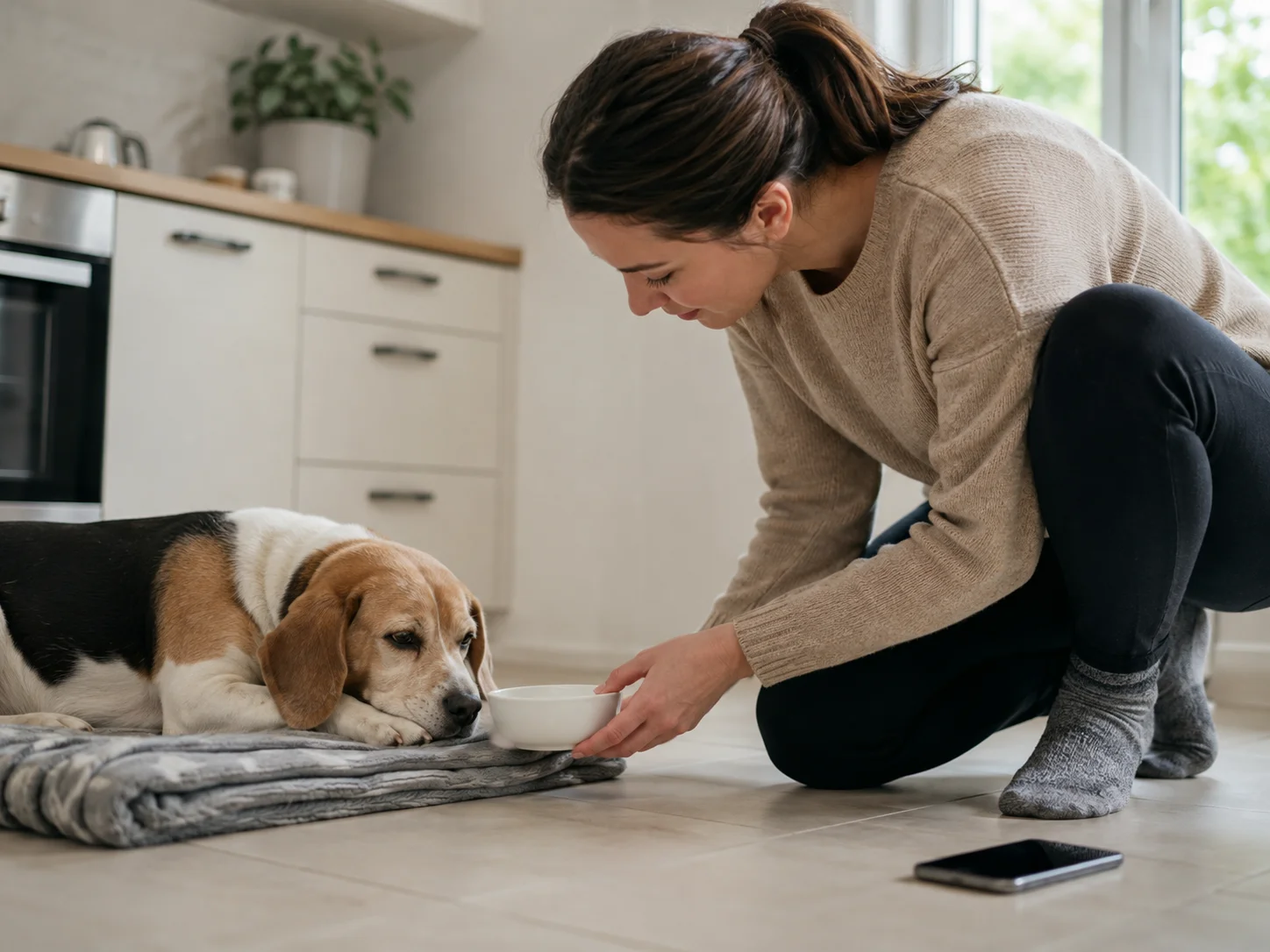
Home care is simple. Rest the stomach briefly after vomiting, then offer water in small amounts and move to small, bland meals. Skip fatty leftovers entirely, since grease is one of the most reliable ways to turn a mild upset into pancreatitis.
One check worth repeating as you monitor: pinch the skin gently between the shoulder blades. If it snaps back slowly instead of instantly, dehydration is creeping in and the tier has changed.
Amber tier: book a same-day visit
Call us when any of these appear. As working thresholds, vomiting that continues past 24 hours or diarrhea past 48 needs eyes on it, and small dogs, puppies, and seniors earn a visit sooner because they dehydrate faster.
- Repeated vomiting or diarrhea that is not settling by the next day
- Refusing food for more than a day, or drinking dramatically more or less than usual
- A single streak of red blood in stool, worms in stool, or soft stool that keeps relapsing
- Any vomiting or diarrhea in a dog with kidney disease, diabetes, or another chronic condition
Our urgent care team holds same-day room for exactly these cases, seven days a week.
Red tier: go to whoever is open, right now
Some presentations cannot wait for a convenient appointment, and a few cannot wait an hour.
- Retching that produces nothing, especially with a swelling belly, restlessness, and drooling. These are the classic warning signs of bloat, where the stomach twists shut. It kills within hours, it targets deep-chested breeds like shepherds, Danes, and standard poodles, and the belly change is not always visible. Unproductive retching alone is enough to go.
- Known or suspected toxin: grapes or raisins, sugar-free gum or peanut butter containing xylitol, chocolate, human medications, rodent bait, or antifreeze. Bring the packaging and go before symptoms start.
- A missing sock, toy, corn cob, or bone fragment paired with vomiting, since a blocked gut worsens by the hour
- Blood in vomit, vomit resembling coffee grounds, or black, tar-like stool, which means digested blood
- Vomiting or diarrhea in a puppy who has not finished her vaccinations, because parvovirus dehydrates small bodies with frightening speed
- Collapse, weakness, a hunched or prayer-position posture, or a belly that hurts to touch
During our opening hours, call and come straight in: TVS Animal Hospital North York: (416) 546-7493 or TVS Animal Hospital Parliament: (647) 347-3300. Outside them, drive to the nearest open veterinary hospital. Minutes matter more than familiarity in this tier.
What to note before you call
Unglamorous but true: photos help us. A picture of the vomit or stool, taken before you clean it up, tells our team more than most descriptions, and the colour and texture narrow the list of causes.
Alongside it, jot down when each episode happened, what your dog ate in the last day including treats and scavenged finds, and whether any toy or household item has gone missing. Add the date of her last deworming, which our parasite prevention team can check in her file. That five-minute log frequently saves a round of diagnostics.
Common questions about dog vomiting and diarrhea
What exactly is a bland diet?
Plain boiled chicken with no skin or seasoning, mixed with plain white rice, fed in small portions several times a day. Once stools firm up and meals stay down, transition back to regular food gradually over a couple of days rather than all at once.
Can I give something from my own medicine cabinet?
Please do not. Several human anti-nausea and anti-diarrheal medications are unsafe for dogs, some at surprisingly small doses, and masking symptoms can hide a problem that needed attention. A quick call to us costs nothing and beats guessing.
My dog eats grass and then vomits. Should I worry?
Occasional grass eating is common, ordinary dog behaviour, and most grass eaters are perfectly healthy. Frantic, compulsive grass gulping paired with repeated retching or the red tier signs above is different, and that combination deserves a call.
My puppy vomited twice this morning but seems playful. Wait or come in?
Come in. Puppies hold tiny fluid reserves, parvovirus moves quickly in dogs who have not finished their vaccine series, and playfulness fades late in the process. With puppies we would always rather see a false alarm than a delayed one.
An upset stomach is one of the most ordinary things a dog will ever have, and one of the few that occasionally hides something serious. Keep the three tiers in mind, trust what you observe, and when you are unsure, reach us through our contact page or call either clinic. Talking it through takes five minutes.