The First-Year Vet Checklist Every New Puppy Owner Needs
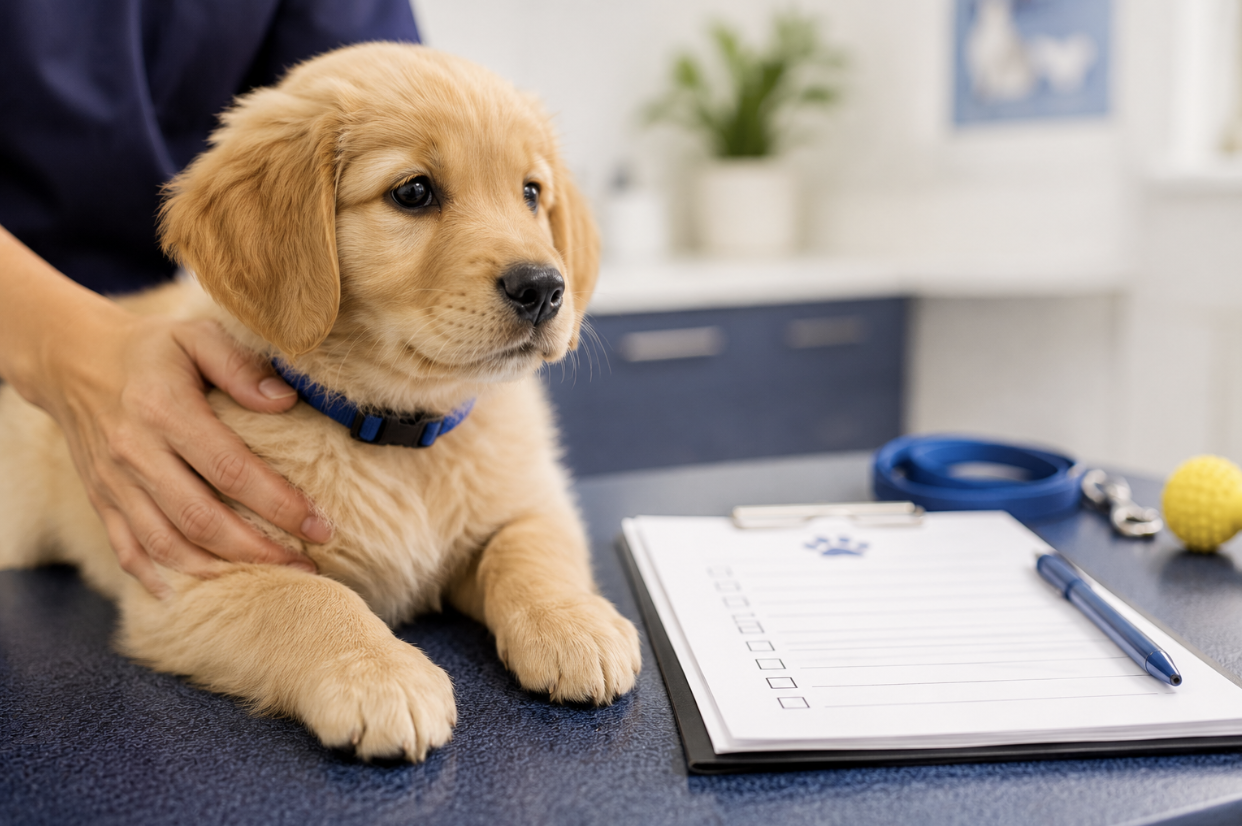
A puppy compresses the equivalent of childhood and adolescence into about twelve months, and her veterinary care compresses right along with it. Most of the visits, decisions, and deadlines in a dog's entire preventive life cluster inside this one year, which is why a first-year puppy checklist earns its place on the fridge.
The map below is how we structure that year for new puppies at both of our clinics. Details follow underneath.
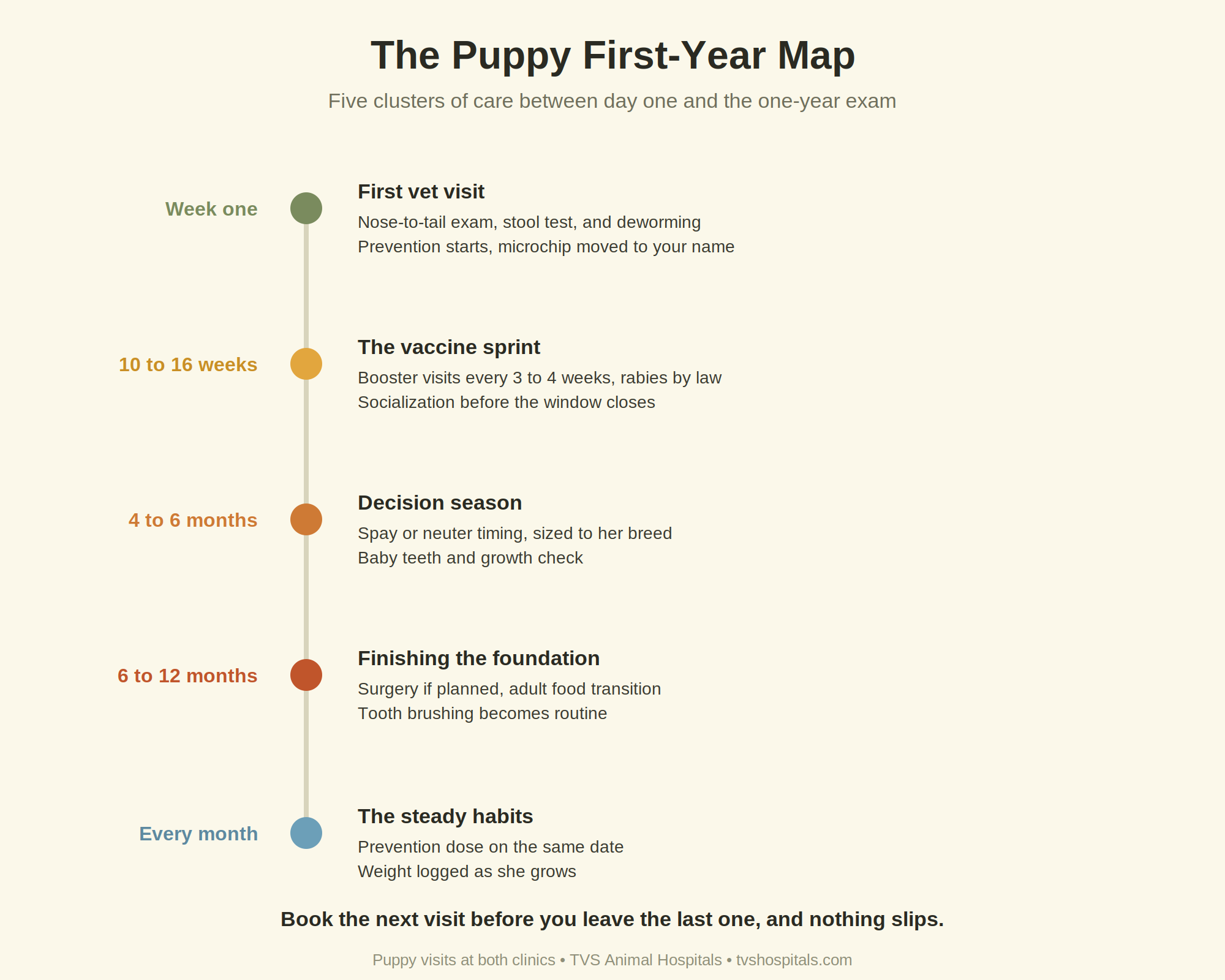
Week one: the first vet visit
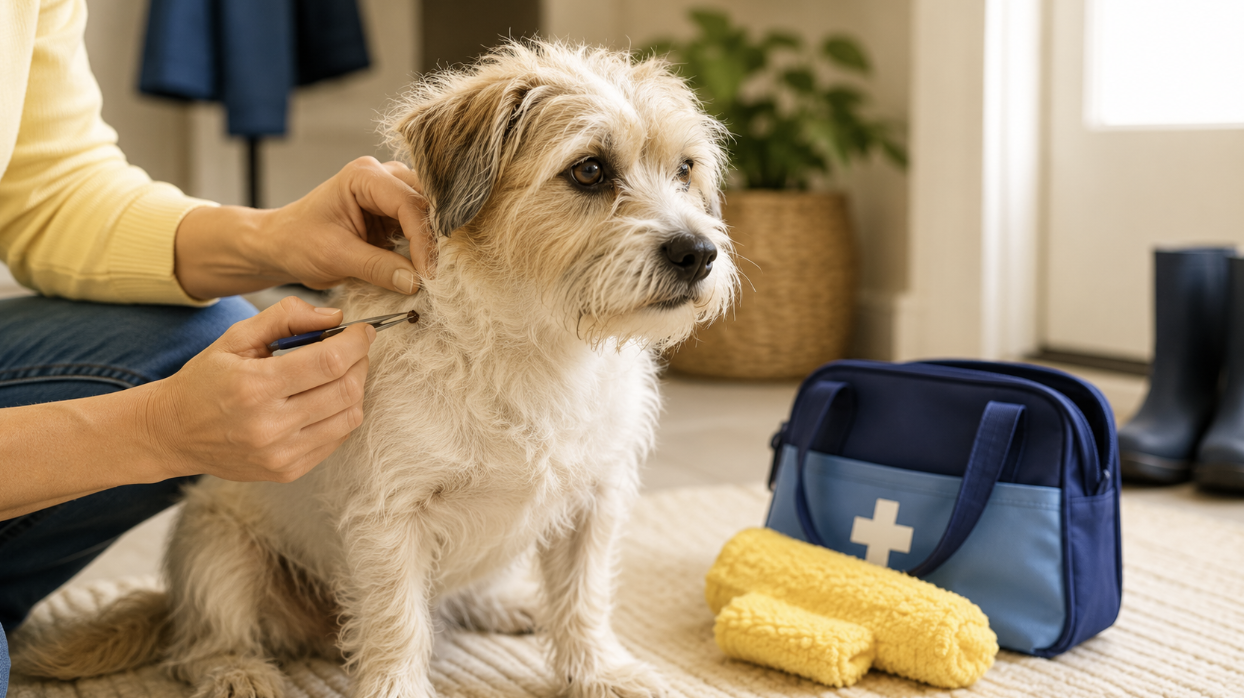
Book your puppy's first vet visit within a few days of bringing her home, even if the breeder or rescue handed over a folder of paperwork. That visit at TVS Animal Hospitals establishes her baseline and catches the things paperwork misses: heart murmurs, hernias, bite alignment, and anything else a nose-to-tail puppy exam is designed to find.
The first-visit checklist:
- Bring her adoption records, her current food details, and a fresh stool sample
- Expect a fecal test and routine deworming, since intestinal worms are common enough in puppies that treating is standard rather than reactive
- Start flea, tick, and heartworm prevention dosed to her current weight, with a plan to adjust as she grows
- Have her microchip scanned, and move the registration from the breeder or shelter's name into yours
- Decide on pet insurance now if you want it, because anything diagnosed before you enrol becomes a pre-existing condition
10 to 16 weeks: the vaccine sprint and the social window
These weeks bring a visit every three to four weeks as her vaccine series builds immunity in stages. One date is not optional: Ontario law requires rabies vaccination for dogs three months and older. We break the full schedule down, vaccine by vaccine, in our companion guide to first-year puppy shots. Add the City of Toronto pet licence to this stretch's to-do list while you are at it.
The same weeks hold a competing deadline. The window when puppies most easily accept new people, dogs, sounds, and surfaces starts closing around three to four months, before the vaccine series finishes. The workable middle path: carry her on outings, invite calm and vaccinated dogs to your home, choose puppy classes that check vaccine records, and save dog parks and unknown dogs until her series is complete.
4 to 6 months: decision season
Two conversations belong in this stretch. The first is spay and neuter timing, which stopped being one-size-fits-all years ago. Many small dogs do well around six months, while large breeds often benefit from waiting longer, so book the conversation now and the surgery when it suits her breed, size, and growth.
The second is her mouth. As adult teeth erupt, some puppies, especially small breeds, hold onto baby teeth that should have fallen out, and retained teeth crowd the adult ones and trap debris. A quick look at this age keeps a five-minute finding from becoming an extraction later.
6 to 12 months: finishing the foundation
- Complete the spay or neuter if you have planned one, with pre-surgical bloodwork and proper pain management
- Transition from puppy food to adult food on the timeline that fits her size, which we will map at her visits since large breeds switch later than small ones
- Start a tooth-brushing habit now, because the routine is far easier to build at eight months than at eight years, and it delays the need for professional dental cleanings
- Book the one-year wellness exam, which closes out puppyhood with an adult baseline: weight, bloodwork if indicated, and booster planning
Every month, all year
Two habits run underneath everything above. Her parasite prevention goes in on the same date each month, adjusted as her weight climbs, and her weight itself gets logged, because a growth curve that flattens or jumps is one of the earliest signals that something deserves a look.
Common questions about the first-year puppy checklist
When can my puppy meet other dogs? Immediately, selectively. Known, vaccinated, easygoing dogs in controlled settings are exactly what the socialization window is for. What waits until one to two weeks after her final vaccine round is the uncontrolled version: dog parks, unknown dogs, and heavily trafficked patches of grass.
How many vet visits does the first year involve? Typically four to six, and they front-load heavily: the first exam, two or three vaccine visits by sixteen weeks, the spay or neuter if planned, and the one-year wellness exam. After this year, most healthy dogs settle into a single annual visit.
What if I adopted an older puppy with an unknown history? Start with the week-one visit anyway. We rebuild the record from an exam, a fecal test, and a vaccine plan appropriate to her age, and missing history is a solvable problem we handle regularly with rescues.
The first year rewards owners who book the next visit before leaving the last one, because the deadlines in this checklist do not wait for a quiet month. If a puppy has just joined your household, call TVS Animal Hospital North York: (416) 546-7493 or TVS Animal Hospital Parliament: (647) 347-3300., or set up her first visit through our contact page, and we will build her year with you.