What Every Ontario Dog Owner Should Know About Lyme Disease and Tick Season

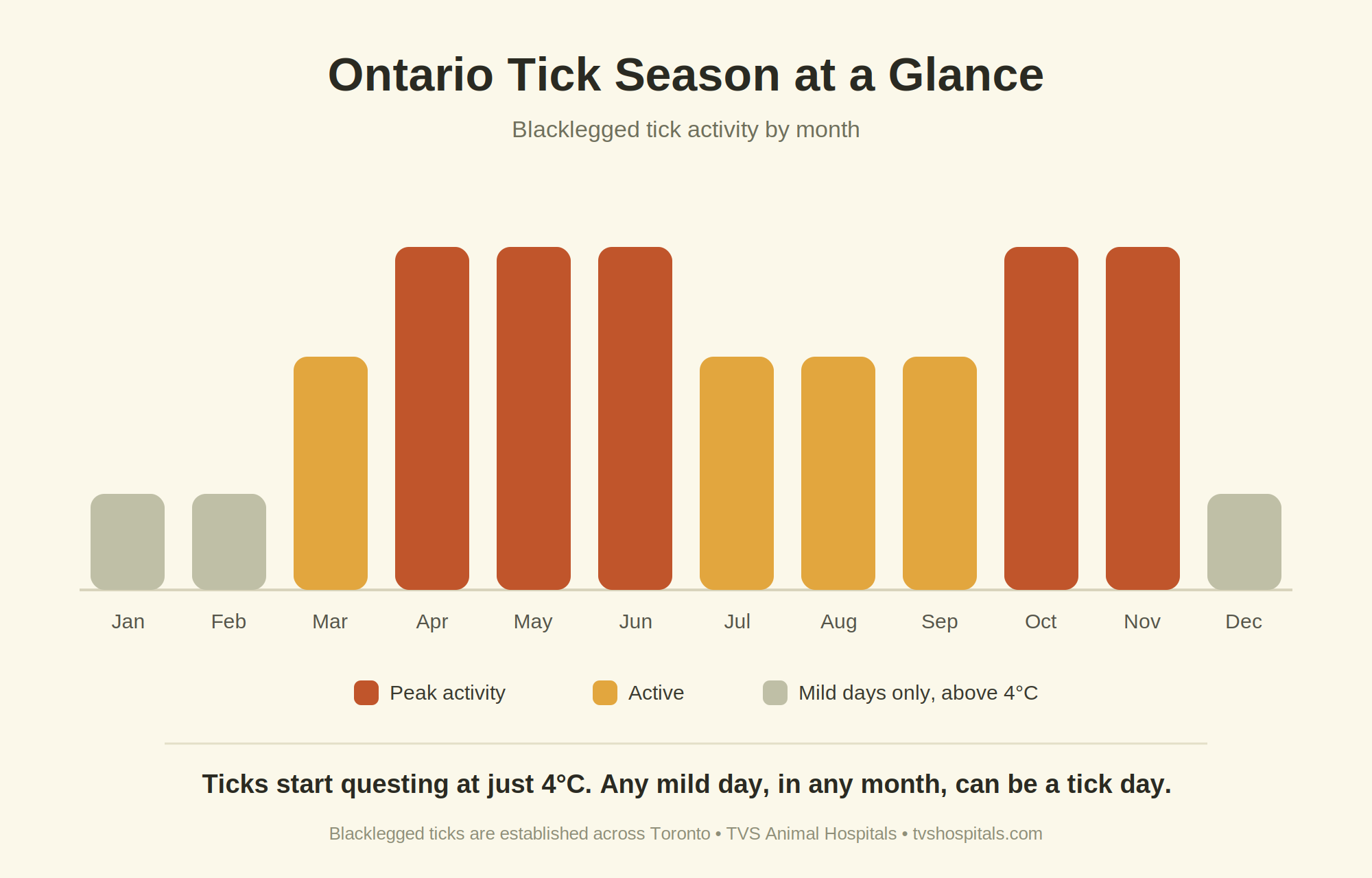
Tick season in Ontario no longer fits neatly between May and September. Blacklegged ticks start hunting for a host at just 4°C, which means a mild afternoon in March, or even February, counts. Understanding that one number changes how you protect your dog, because Lyme disease in dogs is almost entirely preventable.
At TVS Animal Hospitals, we pull ticks off city dogs that never left their own neighbourhood. Here is how Lyme disease in dogs spreads, what the signs look like, and the prevention routine that actually holds up.
Tick season runs longer than most owners think
Ticks do not die off in winter. They go dormant and wake whenever the temperature climbs past 4°C, so in a mild year they stay active from late winter into December. Spring and fall bring the heaviest adult tick activity, while the tiny nymphs, the hardest stage to spot, feed through early summer.
Location no longer offers much protection either. Public Health Ontario's risk map now covers all of Toronto, because blacklegged ticks are established across the city. Ravines, waterfront trails, and overgrown park edges are exactly the damp, brushy habitat they prefer.
How Lyme disease in dogs actually spreads
Only one tick matters here. In Ontario, the blacklegged tick, also called the deer tick, is the only species that transmits the bacteria behind Lyme disease. And it works slowly: a tick usually needs to stay attached for roughly 24 hours or more before transmission happens.
That slow timeline is the good news. A quick daily tick check removes most ticks before they ever pass the bacteria along, which makes your hands one of the most effective prevention tools you own.
Signs of Lyme disease in dogs
Dogs do not develop the bull's-eye rash people watch for, and signs often appear months after the bite, long after the tick is gone. Watch for:
- Limping that shifts from one leg to another
- Fever and unusually low energy
- Swollen joints or lymph nodes
- Stiffness after rest, or reluctance to walk and jump
- A drop in appetite
Most dogs that pick up the bacteria never become ill. Veterinary estimates suggest only around 5 per cent develop symptoms. The catch is that no one can predict which dogs those will be, and a rare form of Lyme disease in dogs attacks the kidneys and can turn fatal. Screening and prevention close that gap.
Where to check your dog after every walk
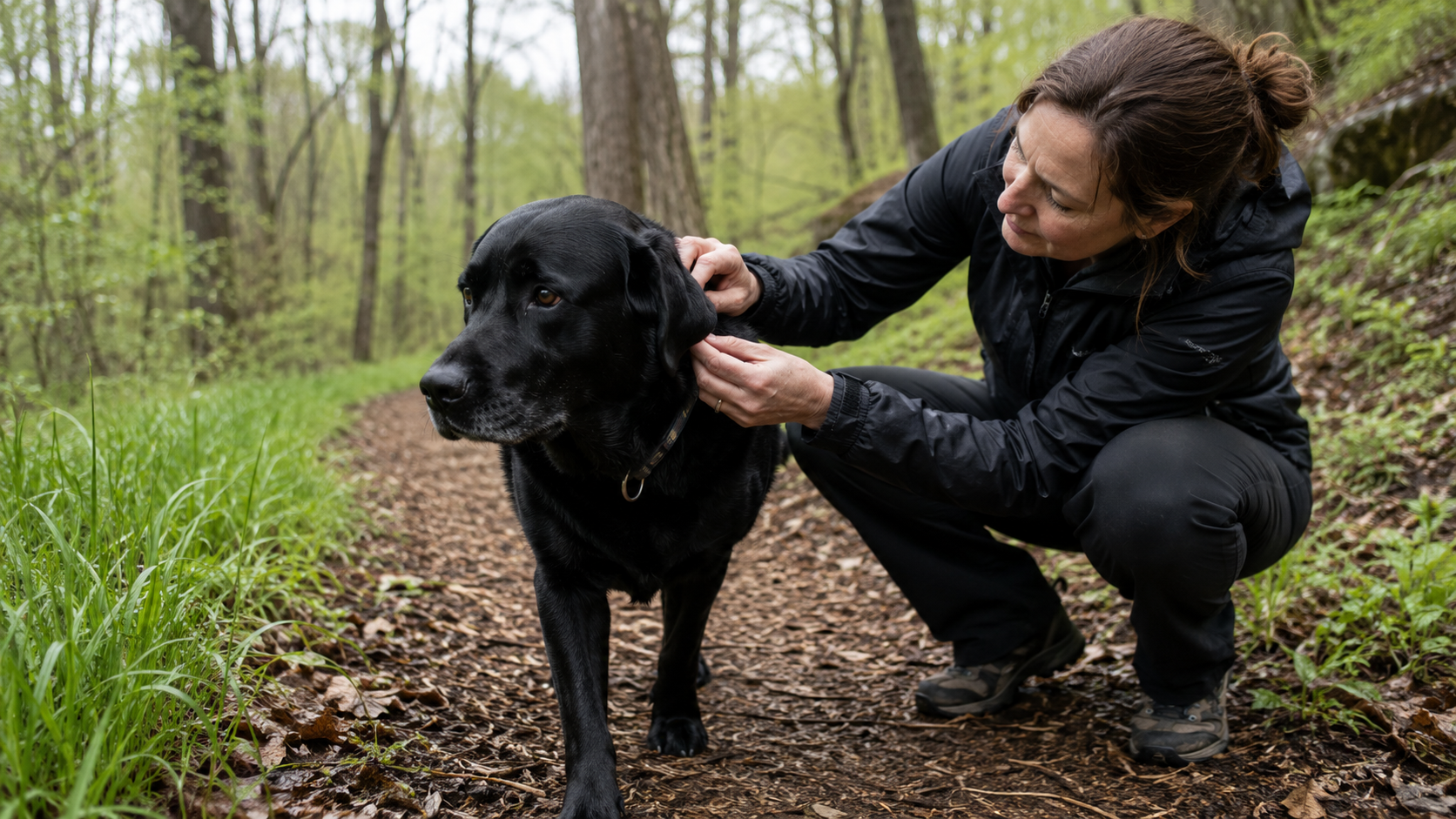
Run your fingers through the coat like a comb. A feeding tick feels like a small, firm bump, often no bigger than a sesame seed. Focus on:
- In and around the ears
- Around the eyes and muzzle
- Under the collar
- Armpits and groin
- Between the toes
- Under the tail
Found one attached? Grip it close to the skin with fine tweezers and pull straight out, or call us and we will remove it properly. Ontario's free eTick platform can identify the species from a photo within about 48 hours, which tells you whether it was the kind that carries Lyme.
Prevention that holds up through tick season
- Keep your dog on a monthly tick preventive from the first mild stretch of late winter until deep December, or simply run it year-round. Our parasite prevention team will match the product to your dog and your routine.
- Book annual screening bloodwork. A simple test detects Lyme exposure along with other tick-borne diseases before symptoms ever appear.
- Ask about the Lyme vaccine if your dog hikes, visits the cottage, or lives near a ravine.
- Do a hands-on tick check after every outing through grass, brush, or leaf litter.
- Stick to the centre of trails and keep your own yard mowed and clear of leaf piles.
When to call TVS
If you find an attached tick, note the date and take a photo before removing it. If fever, limping, or low energy shows up in the weeks or months that follow, call us and mention the bite, because that history shapes how we test. Our team sees same-day urgent care visits seven days a week across Downtown Toronto and North York.
- TVS Animal Hospital North York: (416) 546-7493
- TVS Animal Hospital Parliament: (647) 347-3300
Common questions about Lyme disease in dogs
Does my downtown dog really need tick prevention? Yes. All of Toronto sits inside the province's Lyme disease risk area, and ticks ride into parks and backyards on birds, mice, and other wildlife. City dogs that visit ravines, trails, or off-leash areas face real exposure.
My dog tested positive but seems perfectly healthy. Now what? A positive screening test shows exposure, not illness, and this happens often. We typically follow up with urine and kidney checks, then decide together whether treatment or monitoring makes more sense for your dog.
Can I catch Lyme disease from my dog? Not directly. Dogs cannot pass it to people. They can, however, carry loose ticks into your home, which is one more reason prevention and daily checks protect the whole household.
Is one missed month of prevention a big deal? It can be, especially in spring and fall when adult ticks peak. If you miss a dose, give the next one right away and check your dog thoroughly rather than waiting for the calendar to reset.
Lyme disease in dogs rewards owners who act early: a preventive each month, a tick check each walk, and a screening test each year. If you want a plan built for your dog, call either clinic or book through our contact page and we will set one up.