How to Safely Remove a Tick From Your Dog, and When to Call the Vet
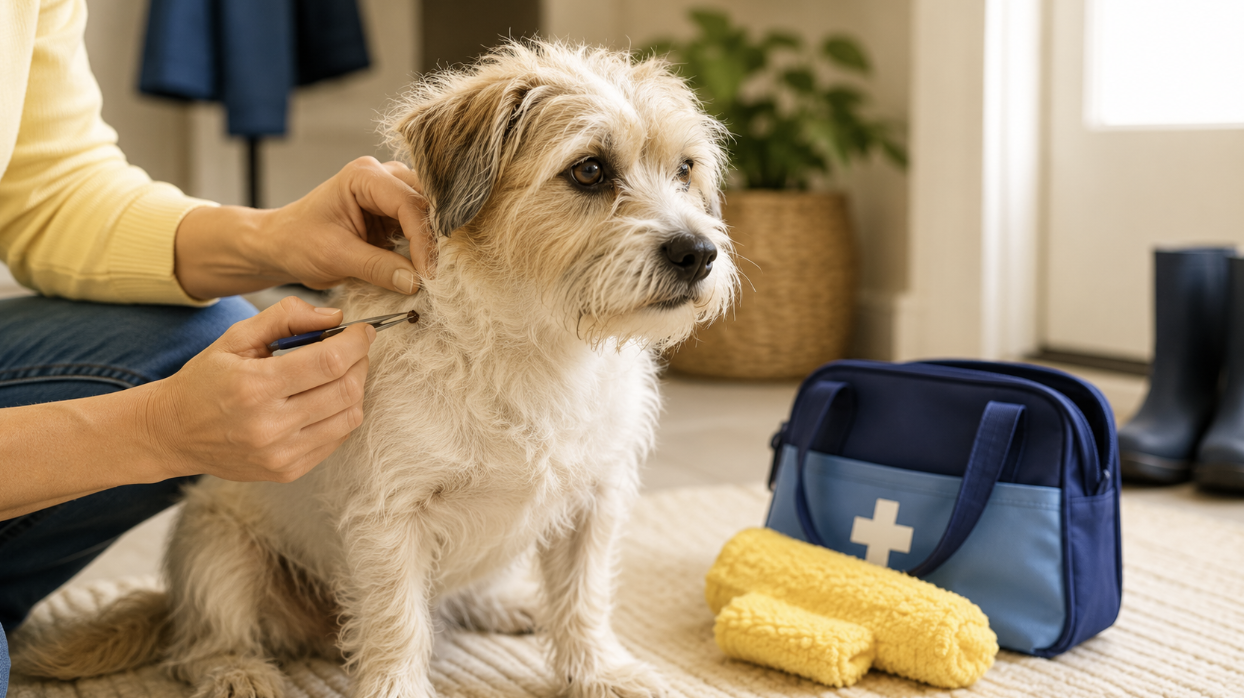
The whole job takes about thirty seconds with the right grip and a steady hand. The home remedies, the lit match, the petroleum jelly, the nail polish, are the ones that turn a small problem into a bigger one. Removing a tick from your dog promptly matters because transmission of Lyme disease usually requires around 24 hours of attachment, so every calm, correct removal buys real protection.
At TVS Animal Hospitals, we walk owners through tick removal over the phone all season. Here is the same method, step by step, plus the situations where you should hand the tweezers to us.
What you need
- Fine-tipped tweezers, not blunt household or eyebrow tweezers, or a tick removal hook
- Rubbing alcohol or antiseptic for the skin afterward, never for the tick beforehand
- A small sealed bag or pill bottle
- Treats, and ideally a second pair of hands to steady your dog
- Gloves if you have them
How to remove a tick from your dog, step by step
- Stay calm and set up in good light. Part the fur so you can see where the tick meets the skin, and have your helper feed treats while you work.
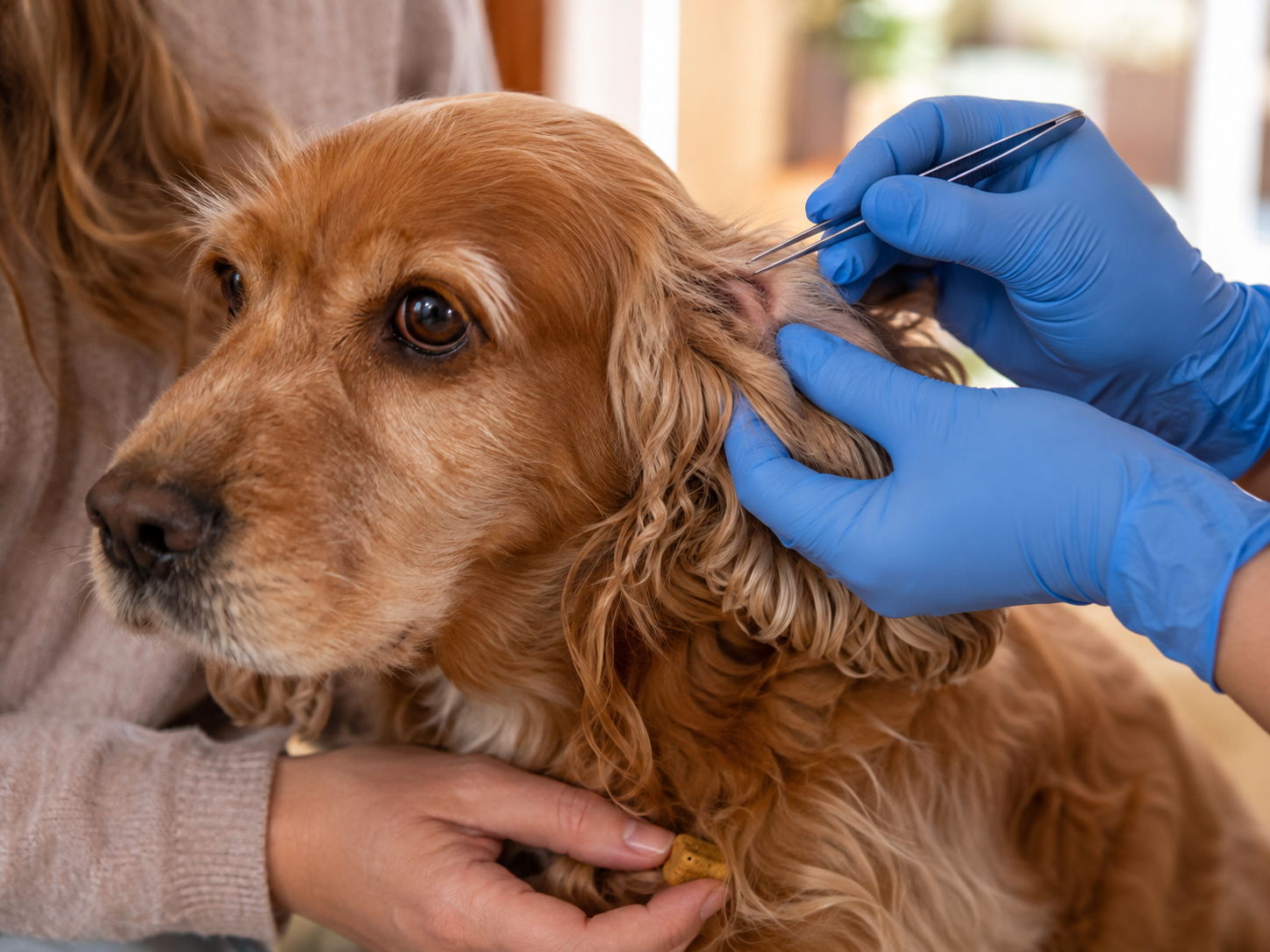
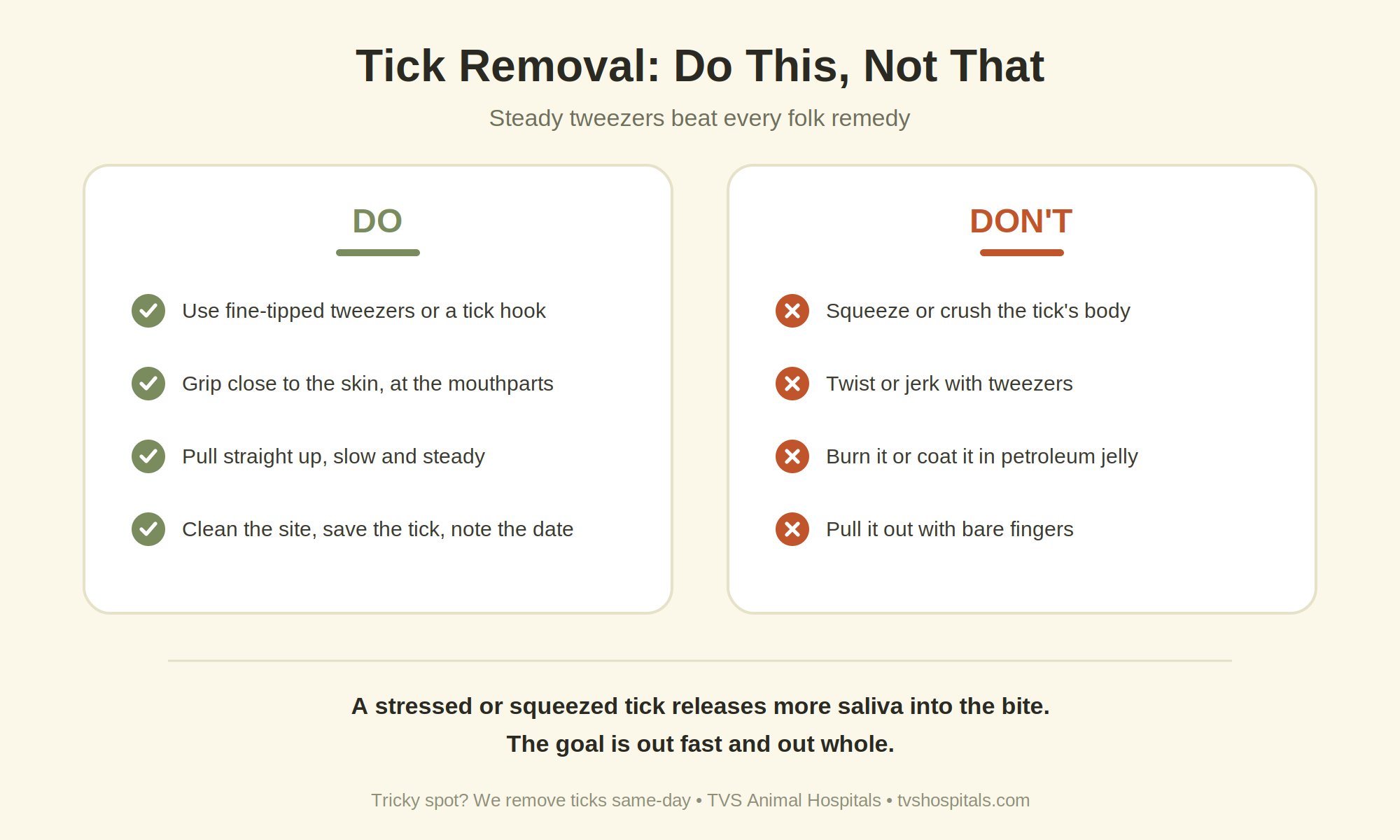
- Grip the tick with the tweezers as close to the skin as possible, around its mouthparts. Never grab the swollen body.
- Pull straight up with slow, even pressure until it releases. No twisting, no jerking. If you use a tick hook, slide it under the tick and follow the tool's own instructions instead.
- Check that the tick came out whole. A tiny dark speck left behind is mouthpart material, not a head. Lift it out only if it comes easily, and otherwise leave it alone. The skin pushes it out like a splinter, and digging causes more damage than the fragment ever will.
- Clean the bite site with antiseptic, wash your hands, and disinfect the tweezers.
- Seal the tick in your bag or bottle, write down the date, and take a clear photo. Ontario's free eTick platform identifies the species from that photo, usually within about 48 hours.
Why home remedies make things worse
Heat, petroleum jelly, and nail polish all work on the same flawed theory: irritate the tick until it lets go. What actually happens is that a stressed or squeezed tick releases more saliva and stomach contents into the bite, which raises the risk of disease transmission rather than lowering it. The goal is out fast and out whole, not persuaded to leave.
What is normal after tick removal
A small, firm, red bump at the site is common and can linger for a few days, sometimes a week or two. That is a local skin reaction, not proof of infection. Redness that spreads, swelling, heat, or oozing is a different story and deserves a call.
When to call the vet instead
- The tick sits somewhere delicate: inside the ear, on an eyelid, or around the lips
- You cannot get a grip on it, or your dog will not hold still safely
- The bite site keeps getting redder, more swollen, or starts to ooze
- The tick came off plump and grey, the size of a raisin rather than a sesame seed, which means it fed for a while
- You find several ticks at once
- Fever, low energy, appetite loss, or limping that moves from leg to leg shows up in the weeks or months after a bite. Those are the classic signs we cover in our guide to Lyme disease in dogs, and they warrant an exam and possibly screening bloodwork.
- Your dog is not on tick prevention, which our parasite prevention team can fix in a single visit
Tick removals and tick-bite worries count as same-day visits at both of our clinics, seven days a week.
- TVS Animal Hospital North York: (416) 546-7493
- TVS Animal Hospital Parliament: (647) 347-3300.
Common questions about tick removal
The head broke off in my dog's skin. Did I do it wrong? Not necessarily, and there is no need to panic. What remains is mouthpart material, and the body treats it like a splinter, walling it off and pushing it out. Clean the area, leave it be, and call us only if the site worsens over the next few days.
Should the tick or my dog get tested? Photograph the tick for eTick so you know whether it was a blacklegged tick, the only Ontario species that carries Lyme disease. For your dog, testing too early tells you nothing, so we typically recommend screening bloodwork several weeks after a known bite. Bring your dated photo to the appointment.
How do I get rid of the tick once it is out? Seal it in a bag, stick it to tape, or drop it in rubbing alcohol. Never crush it with your fingers. Better yet, keep the sealed tick for a few weeks with the date noted, because it becomes useful evidence if your dog later gets sick.
Do ticks jump or fall out of trees? No. Ticks only crawl. They climb to the tip of grass or brush and wait with front legs outstretched for something warm to walk past. That is why sticking to the centre of trails cuts your dog's exposure so effectively.
Removing a tick from your dog is a skill worth having, and needing help is nothing to feel bad about. If the tick is somewhere tricky or something about the bite worries you, call either clinic or book through our contact page and we will handle it together.