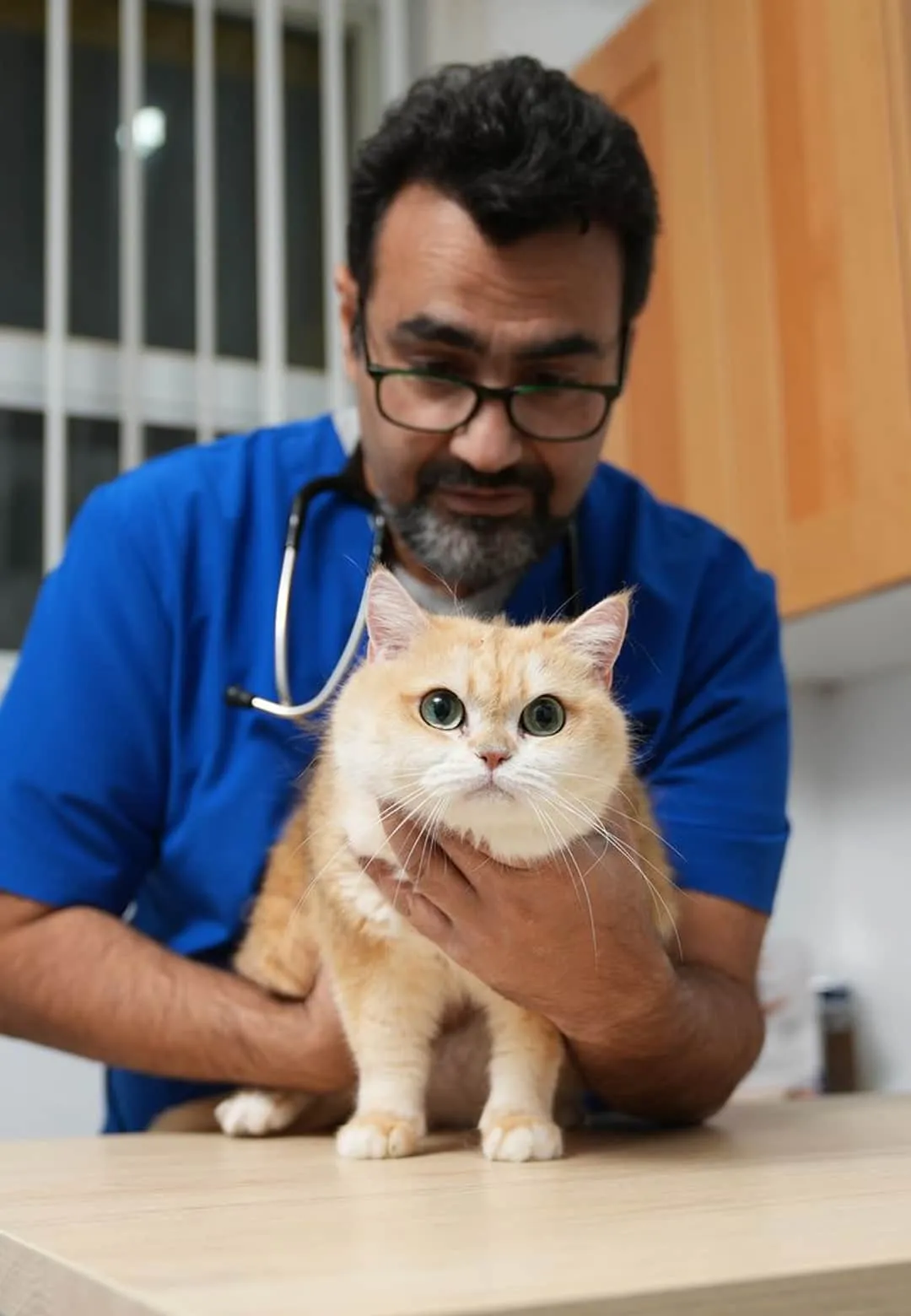
The Health Paperwork You Need to Travel With Your Pet This Summer

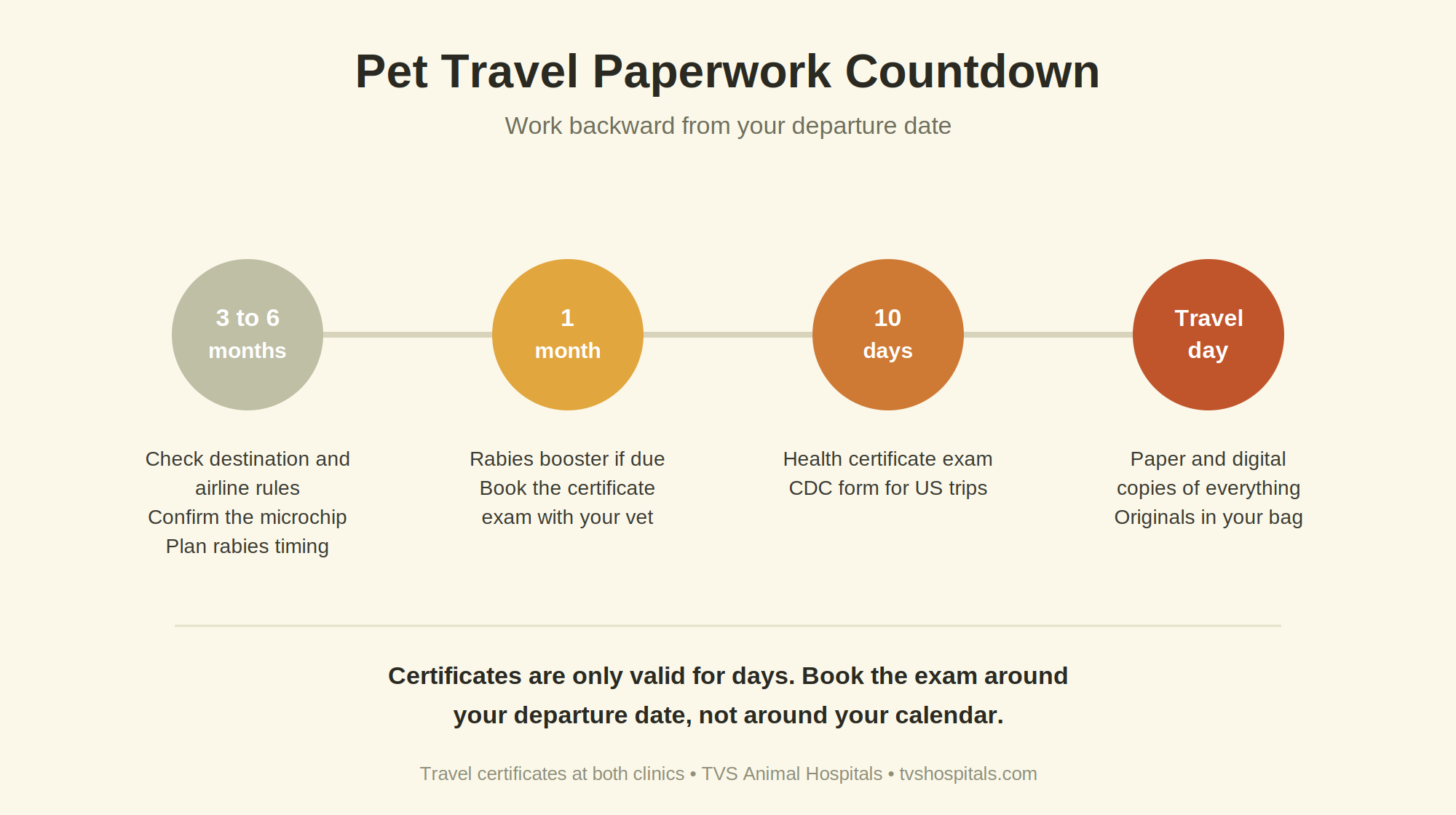
Pet travel paperwork comes down to three questions: where you are going, how you are getting there, and who will be checking. The answers decide everything, and the most common mistake is starting too late. Some certificates stay valid for only days, while some destinations need preparation that begins months out.
At TVS Animal Hospitals, we issue travel certificates for dogs and cats leaving from Toronto and North York all summer long. Here is what each trip actually requires, and when to book.
The three documents that cover most trips
- A rabies vaccination certificate, the workhorse of pet travel, identifying your pet, the vaccine used, and the date given
- A pet health certificate, a signed document confirming your pet passed a veterinary exam within a set window before departure
- The CDC Dog Import Form, a free online form for any dog entering the United States
Which ones you need, and in what order, depends on the trip.
Crossing into the United States with a dog
The US rules changed in August 2024, and they now apply at every border crossing, land or air. Under the current CDC requirements, your dog needs:
- A CDC Dog Import Form receipt, completed online before arrival, one form per dog
- A microchip that a universal scanner can read
- To be at least 6 months old, with no exceptions for puppies
- To appear healthy at the border
For dogs coming from Canada, that form is the only federal document required, and the receipt stays valid for repeat crossings for up to six months. Airlines often ask for more, and your return trip definitely does. Cats need no CDC form at all, though airline rules still apply.
Coming home to Canada

Canada checks paperwork in the other direction. Dogs and cats three months and older need a valid rabies vaccination certificate, written in English or French, that clearly identifies the animal.
Check the expiry date against your return date, not your departure date. A rabies vaccine that lapses mid-trip creates real problems at the border, so book the booster through our vaccination team before you leave. Carry the original certificate, not just a photo.
Flying: the airline adds its own layer
Government rules set the floor, and airlines build on top of it. Confirm with your specific carrier for every segment of the trip, because policies vary widely. Expect some combination of:
- A pet health certificate issued shortly before travel, often within 10 days
- Carrier size and weight limits, advance pet reservations, and fees
- Restrictions on flat-faced breeds, which many airlines decline year-round
- Summer heat rules that pause pet travel in the cargo hold during hot stretches
That last point matters in July and August. If your pet is too large for the cabin, ask the airline
Going overseas: start months ahead
Europe shows why timing rules the process. Canada's requirements for the EU run in a strict order:
- Microchip first, because a rabies vaccine given before the chip does not count
- Rabies vaccination, followed by a 21 day wait after a primary dose
- An EU animal health certificate completed by your veterinarian, then endorsed by a CFIA veterinarian as the final step
- Travel within 10 days of the certificate signature, and within 5 days for Finland, Malta, Ireland, and Northern Ireland
A few of those destinations also require a vet-administered tapeworm treatment shortly before arrival. Other countries set their own rules, and rabies-free destinations can demand blood tests with waiting periods measured in months. For anything overseas, talk to us 3 to 6 months before you fly.
Booking your pet health certificate at TVS
The exam itself is straightforward: we check your pet nose to tail, confirm vaccines and parasite prevention meet the destination's rules, and complete the exact certificate your route requires. The scheduling is the part that takes precision, since the certificate's validity window has to land on your departure date.
Call us with your destination, airline, and travel dates, and we will map the paperwork backward from there.
- TVS Animal Hospital North York: (416) 546-7493
- TVS Animal Hospital Parliament: (647) 347-3300.
Common questions about pet travel paperwork
Do I need documents to drive my dog to a cottage within Ontario? No government paperwork applies inside the province. Carry proof of rabies vaccination anyway, since campgrounds, kennels, daycares, and any clinic you visit on the road may ask for it.
How long does a pet health certificate stay valid? It depends entirely on the destination. Many airlines want one issued within 10 days of travel, the EU certificate lasts 10 days from signature, and a handful of countries cut that to 5. We time your exam to your departure, not the other way around.
My puppy is five months old. Can she come to the US with us? Not yet. The CDC sets a hard minimum of 6 months for dogs entering the United States, with no exceptions. Plan the trip for after her six-month birthday or arrange care at home.
Does my cat need anything for a US road trip? Nothing from the CDC on the way down, just a healthy-looking cat. She will need a valid rabies vaccination certificate to come back into Canada, so sort that before you leave rather than scrambling at the border.
Paperwork problems are the one travel disaster that is entirely preventable. Tell us where you are headed, and we will make sure your pet's documents clear every checkpoint. Call either clinic or book through our contact page with your travel dates in hand.